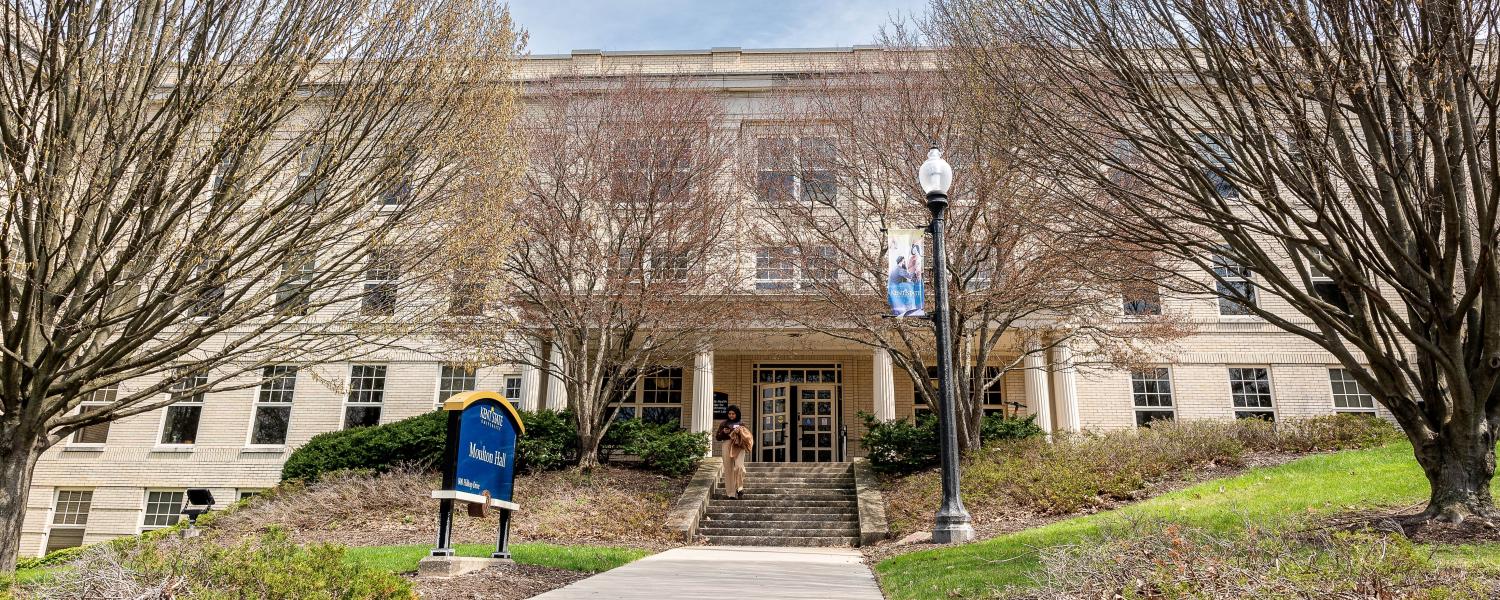


Kent State University's College of Public Health and Health Sciences brings together complementary disciplines to support interdisciplinary education and innovation. The U.S. Bureau of Labor Statistics projects a 17% growth in community and social service occupations, including public health roles, from 2022 to 2032.


What Have We Been Up To?

Kent State University’s Center for Public Policy and Health and Prevention Action Alliance received a $3 million federal Substance Abuse and Mental Health Services Administration grant to expand substance use prevention across 20 counties in eastern and southeastern Ohio.

A foot injury ended Jaden Hacking’s track career – and introduced him to podiatric medicine. Now an exercise science major at Kent State, he’s on the pathway to studying at the university’s College of Podiatric Medicine, drawn by both the impact on patients and the profession’s work-life balance.

Kent State University's expertise in exercise science made national headlines this week when Ellen Glickman, Ph.D., professor of exercise physiology, was featured in The Wall Street Journal's Climate & Energy newsletter. The July 16 piece, "How a Hotter Planet Is Changing the Business of Sports," explored how rising global temperatures are forcing leagues, tournaments and even the Olympics to rethink schedules, venues and player safety protocols.

Administrators at Kent State’s Speech and Hearing Clinic recently expanded their long-standing partnership with the University’s Child Development Center when coordinators in the Speech Language Pathology program designed and executed an immersive, on-campus training program for graduate students.

The Elisabeth Severance Prentiss Foundation has awarded $1.75 million to Kent State University’s College of Public Health that will support students and programs, such as the Mobile Flashes program.

The halls of Kent State University are currently echoing with two distinct but harmonized sounds, the rustle of stiff, new white coats and the confident handshakes of departing professionals.
Kent State University’s College of Public Health has earned a national ranking for the university in the newly released U.S.

Public health isn’t confined to the clinical setting. It happens all throughout our communities every day, from the restaurants where you eat to public parks. Jonathon Fauvie saw that firsthand while working in healthcare communications, which led him to pursue public health at Kent State University.

In her first year at MetroHealth's dentistry program, Bonillo Farias is participating in a partnership between MetroHealth and Kent State University that integrates public health education into clinical dental training. The collaboration was made possible by a federal grant awarded to MetroHealth to strengthen dental residents' public health skills.

University Hospitals (UH) has longstanding history of extraordinary support for both Kent State University and the College of Public Health. CPH students work with UH in a variety of ways, including internships, volunteering, and shadowing opportunities.

Image