
Dae’onii Robinson is a second year Political Science student, with minors in Pre-Law and Paralegal Studies who recently spent spring break in Mexico City studying abroad with the Environmental Policy in Mexico City program.
The program is a joint research effort between Kent State and Universidad Panamericana in Mexico City. Students in the program learn about ways to reduce poverty and promote economic inclusion in Mexico, while also learning about ancient cultural traditions.
Studying Abroad in Mexico City
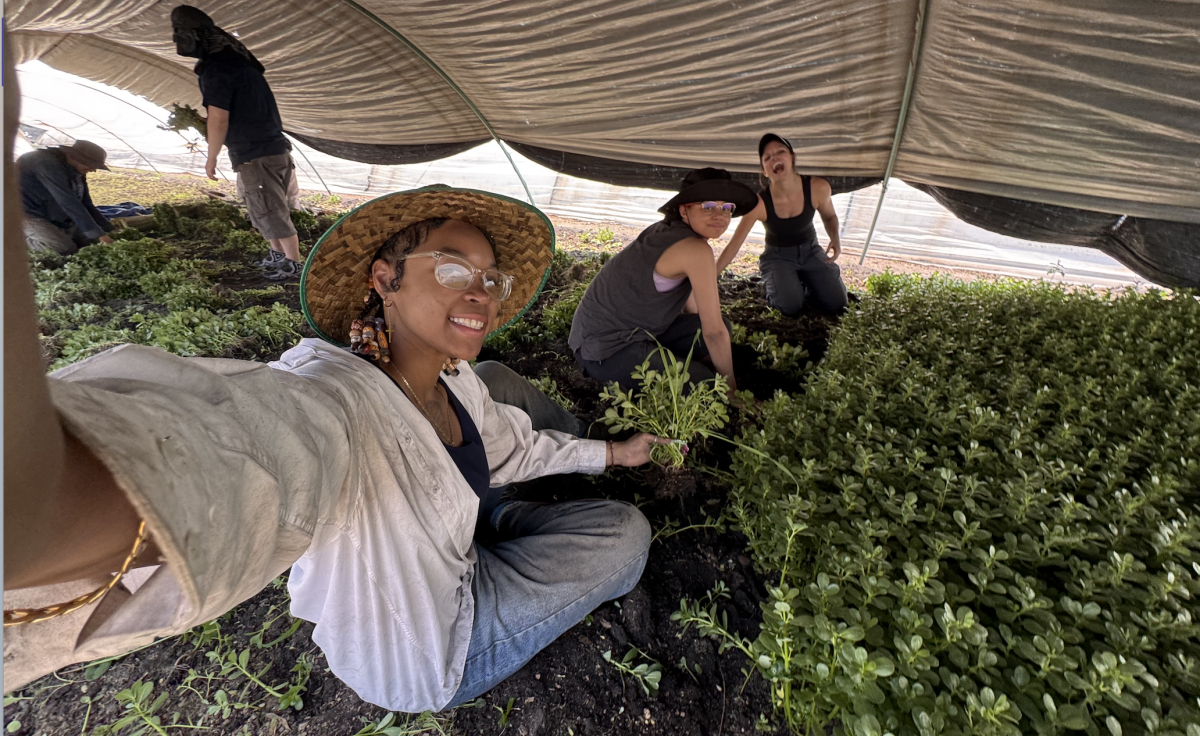
Dae’onii decided to study abroad over spring break in Mexico City because she really enjoys the courses taught by Assistant Professor Sarah Schmidt who leads the program. She found the program was exciting and kept students busy.
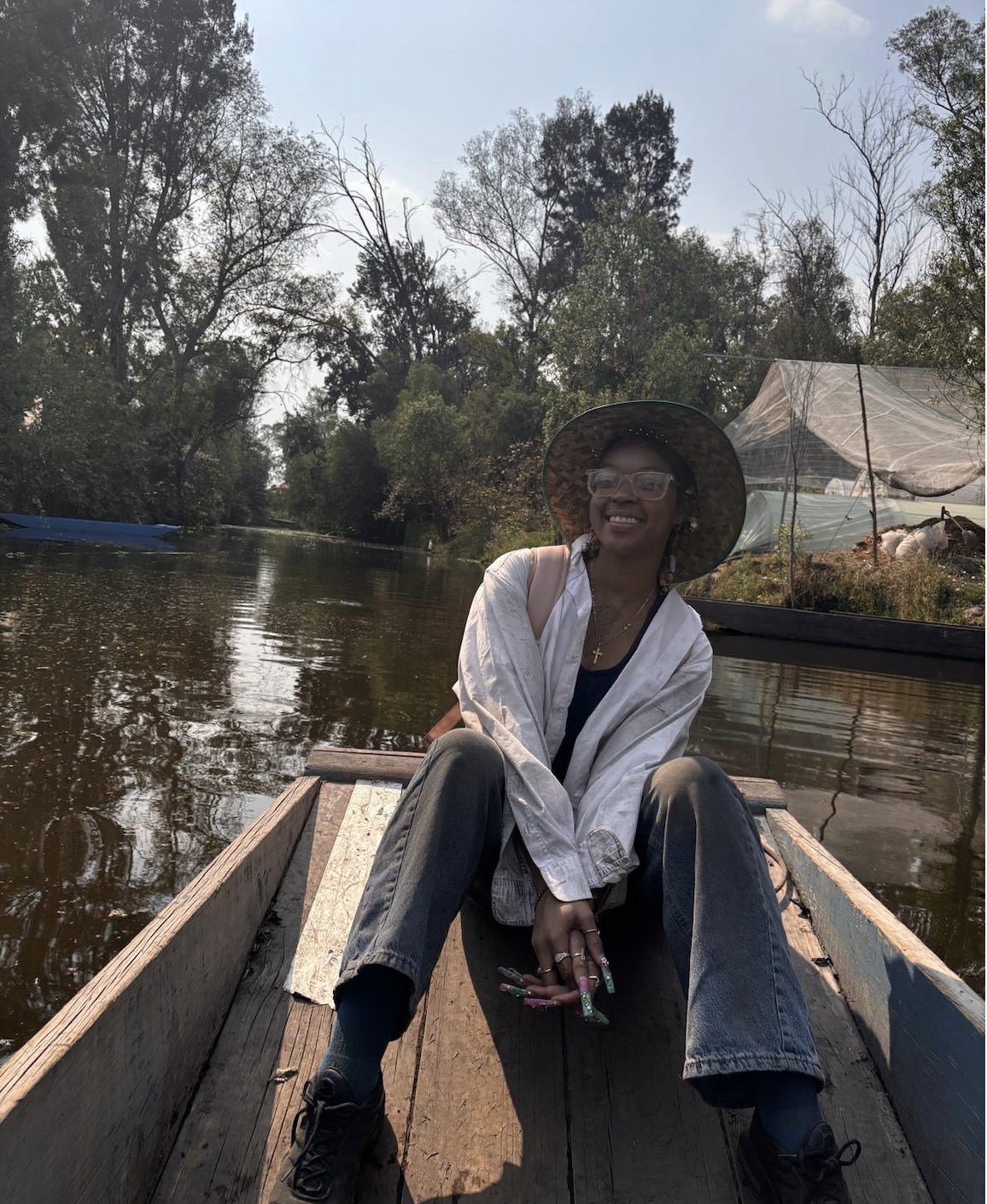
During the program, the students are split into research groups with students from both Kent State University and Universidad Panamericana on each team. The students collaborated with chinamperos, traditional farmers who are descendants of the Xochimilca people. Dae’onii and the other students visited the chinamperos at the chinampas, which are rectangular floating gardens on shallow lakes in Xochimilco. The tradition goes back to the Aztec era.
One of the first things Dae’onii learned while working with the chinamperos is that the food is their culture, another reason why these conservation efforts are so important. She also learned about the difference between local farming versus corporate farming and the difference in produce and how cultivation can look. Because of the costs that go into maintaining local farms it is hard for local farmers to compete with large corporations, which can mass produce low quality food for cheaper.
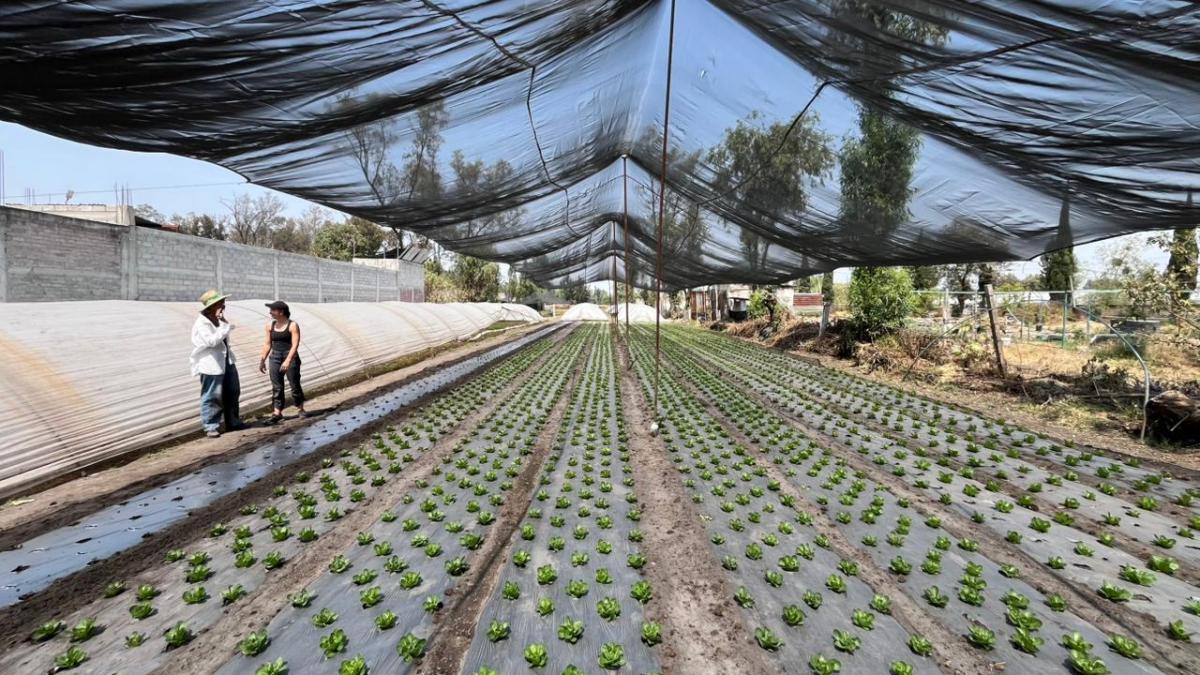
Dae’onii said that her research team was proficient in Spanish, which helped immerse her more in the culture and learn more from the chinamperos. She said that it felt like the shortest and longest week at the same time, because of how much they were doing each day. The class would spend their days working with the chinamperos and their evenings exploring the city and getting to know more of the culture.
Dae’onii felt like she learned a lot with this experience. She found working with the chinamperos helped her understand more about working in an environment where she is not an expert on something. It also gave her a different viewpoint and helped her gain a better understanding of Mexican culture. Being with the chinamperos was a constant state of learning for Dae’onii.
Structure of the Environmental Policy in Mexico City Program
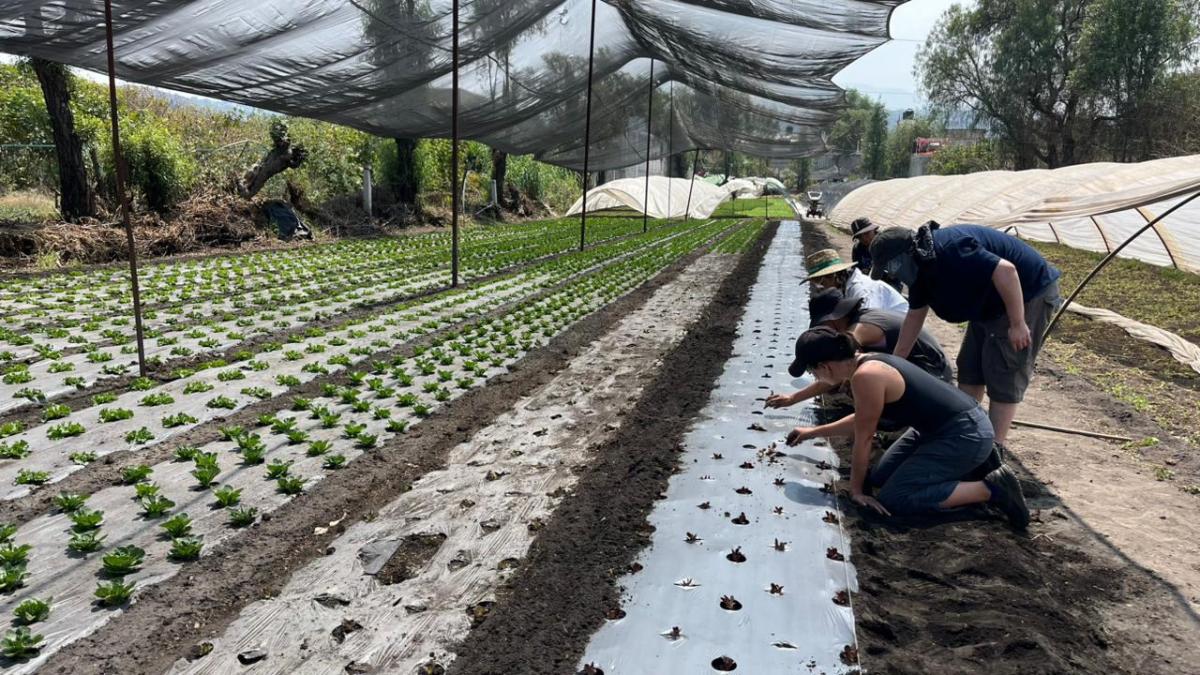
For the first two days of the program, students went to Universidad Panamericana and did research to figure out what they wanted to do for the research projects. This was also a chance to get to know the students from Universidad Panamericana. On day three they went to the chinampas in Xochimilco, about an hour from where they were staying, and got to walk around with the chinamperos and learn more about the issues they were dealing with. Another day was spent going back to Universidad Panamericana to do more research based on what the chinamperos needed and how they were looking to move forward with the project.
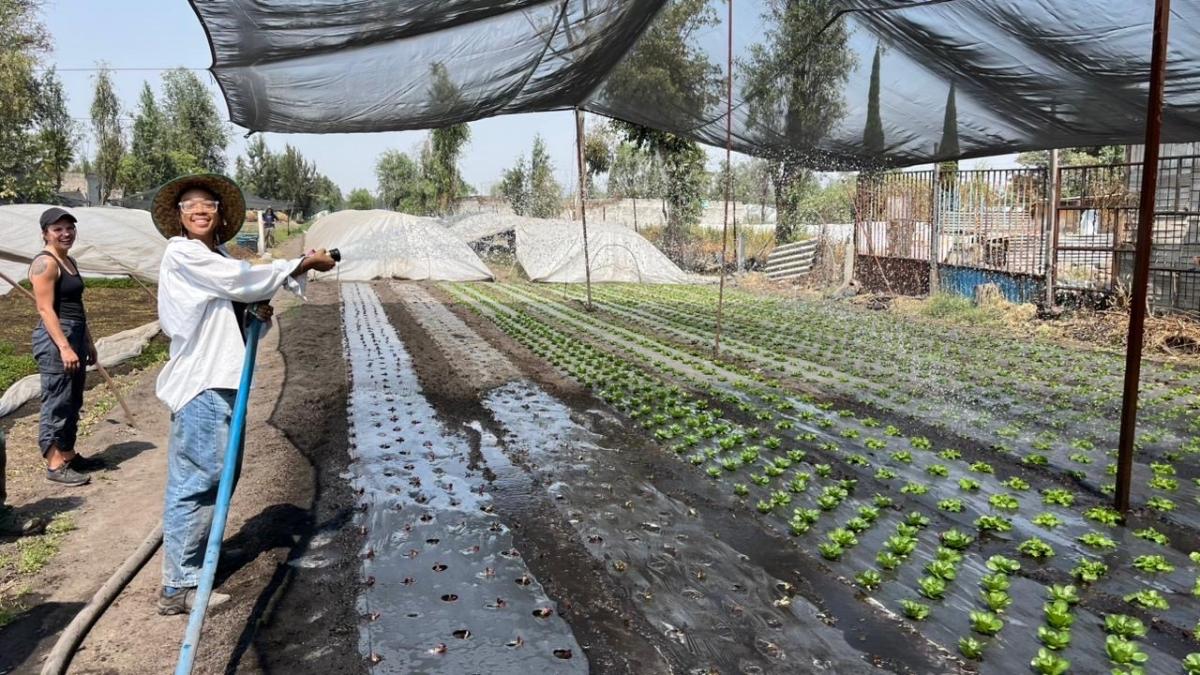
Dae’onii researched the machinery chinamperos use like propellers, blades, and some of the fabric for cultivating produce. Dae’onii and her team also worked on coming up with budget requests and a marketing plan that followed the city's regulations. Towards the end of the program students were at the chinampas from eight in the morning to about six at night working with the chinamperos. They helped plant seeds and operated machinery. They would also go to local markets and see if anyone would be interested in working with the chinamperos. The last day of the program, students went around the city, talked with locals, and did more marketing.
Exploring Mexico City
Because of the long days, students like Dae’onii would often explore the city at night. The group explored Coyoacán, a municipality in Mexico City known for its colorful streets and lively local markets. The group took a trajinera ride together, a traditional boat ride through the chinampas and Aztec canals of the Xochimilco area.
The Impact of Studying Abroad in Mexico City
Dae’onii found her favorite part of the experience was being immersed in Mexican culture. While she was nervous at first about adapting to the culture, upon getting there and being surrounded by all the different people she thought of how beautiful it all was. She was so immersed in the experience that when returning to the U.S., she experienced reverse culture shock.
Dae’onii also enjoyed learning and trying new things in Mexico and getting to practice her Spanish speaking skills more. She considered the experience impactful to her education, because of the emphasis of learning from other people. She has started to apply that perspective to other parts of her life now. Dae’onii said that it helps to understand that no matter how much knowledge you may have on a topic, there will always be someone else to learn from.
Learn more about the Environmental Policy in Mexico City program.
Favorite Food & Recommendations for Study Abroad Students in Mexico
Dae’onii’s favorite food in Mexico City were green chorizo tacos. Her favorite drink was horchata.
For students planning to study abroad in Mexico, Dae’onii recommends learning basic Spanish even if the program is taught in English. Students can make do if they don’t know any Spanish, but being able to communicate with locals helps enrich the experience.
Advice for Study Abroad Students
Dae’onii’s advice to future study abroad students is to not let costs hold you back. Working with the Office of Global Education can give students access to scholarships, which often go overlooked since not many students may choose to study abroad. Dae’onii said she ended up getting enough scholarships to cover the full cost of studying in Mexico City during spring break.
Want to have an experience like Dae’onii’s? Learn more about the Environmental Policy in Mexico City program.