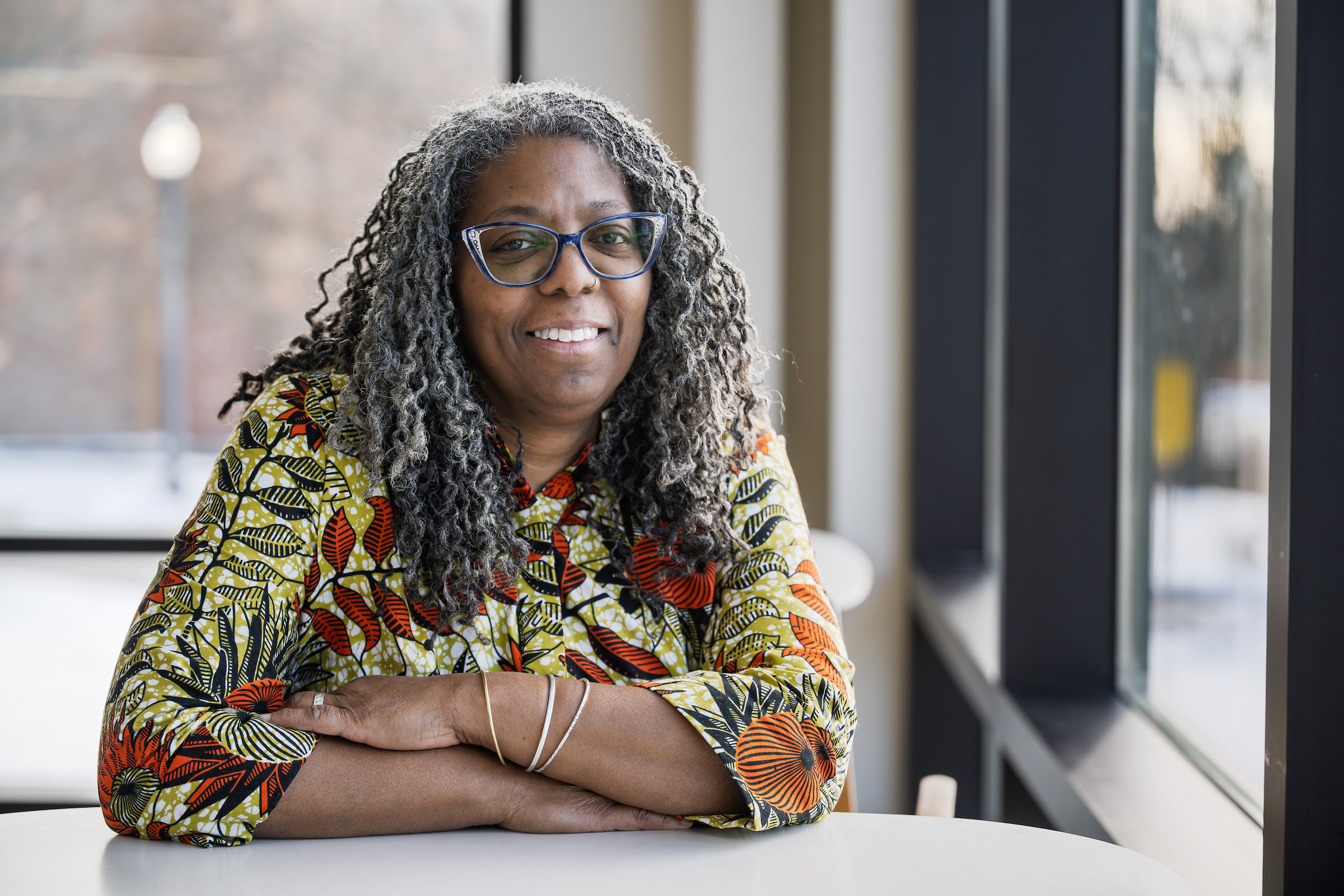
POV shares insights from the Kent State University community on important topics. Liz Piatt, interim dean of University College, shares her journey as a first-generation college student and how faculty mentorship helped her discover a career path she didn't know existed — one that now allows her to support other first-generation students as they navigate their own transformative college experiences.
Every student on a college campus has a first-generation story — a story about the first person in their family earning a bachelor's degree.
More than a third of Kent State students are part of their family's first-generation story. First-gen students are trailblazers and waymakers whose degrees will not only change their lives but the lives of their families.
I am one of them.
Neither of my parents earned a bachelor's degree, and I was the first of my siblings to finish college.
Navigating college my first year was a real challenge because I didn't know anyone who had done it before. I was also very self-reliant and didn't ask for help.
Like many first-gen students, I thought the only major options were professional programs like business, education or nursing. However, faculty and staff exposed me to careers I didn't even know existed and showed me how to market the transferable skills I developed.
I came to Kent State intending to major in medical laboratory science, but after struggling in my science classes — because I didn't take advantage of tutoring — my biology instructor suggested I consider a different major. I was devastated.
I went to see Dr. Edward Crosby, chair of the Department of Africana Studies, whom I'd met during my first week on campus. He had encouraged me to take classes in the department, so I'd taken a few and was thinking about a minor.
Dr. Crosby advised me to consider majoring in Africana Studies and helped me make an appointment with Career Exploration and Development to figure out my career path. The career advisor suggested that, given my campus involvement, I might want to explore working with college students as a career. That conversation opened up so many possibilities.

Dr. Crosby became my major advisor and made sure I was taking advantage of leadership opportunities on campus. With that support, I got connected, found a great fit for a major and career, and earned my degree despite struggling through those first couple of years.
I discovered my future career path and got my first job after graduation because of my experiences as a resident assistant and peer success mentor.
There's lots of data showing that those with bachelor's degrees earn more over their lifetimes compared to those with only a high school diploma. This has been true for me, but my having a college degree has also had a positive impact on my extended family.
I was able to help my siblings successfully navigate college and graduate school, and have helped cousins, nieces, nephews, and their friends, more recently. My experience in college helped me network with people in many different fields, so I've been able to connect family members with job opportunities and resources for postsecondary job training.
In my current work, I oversee many of our student support programs and services that help first-gen students at Kent State thrive.
We celebrate their strengths and accomplishments through our I Am First program, recognize those first-gen students and alumni who are paying it forward, and honor the fact that everyone has a first-generation story.
When I meet new first-generation students, I tell them that earning a college degree was life-changing for me, and I know it will be life-changing for them.
They will become their family's first-gen story, and we will support them every step of the way.