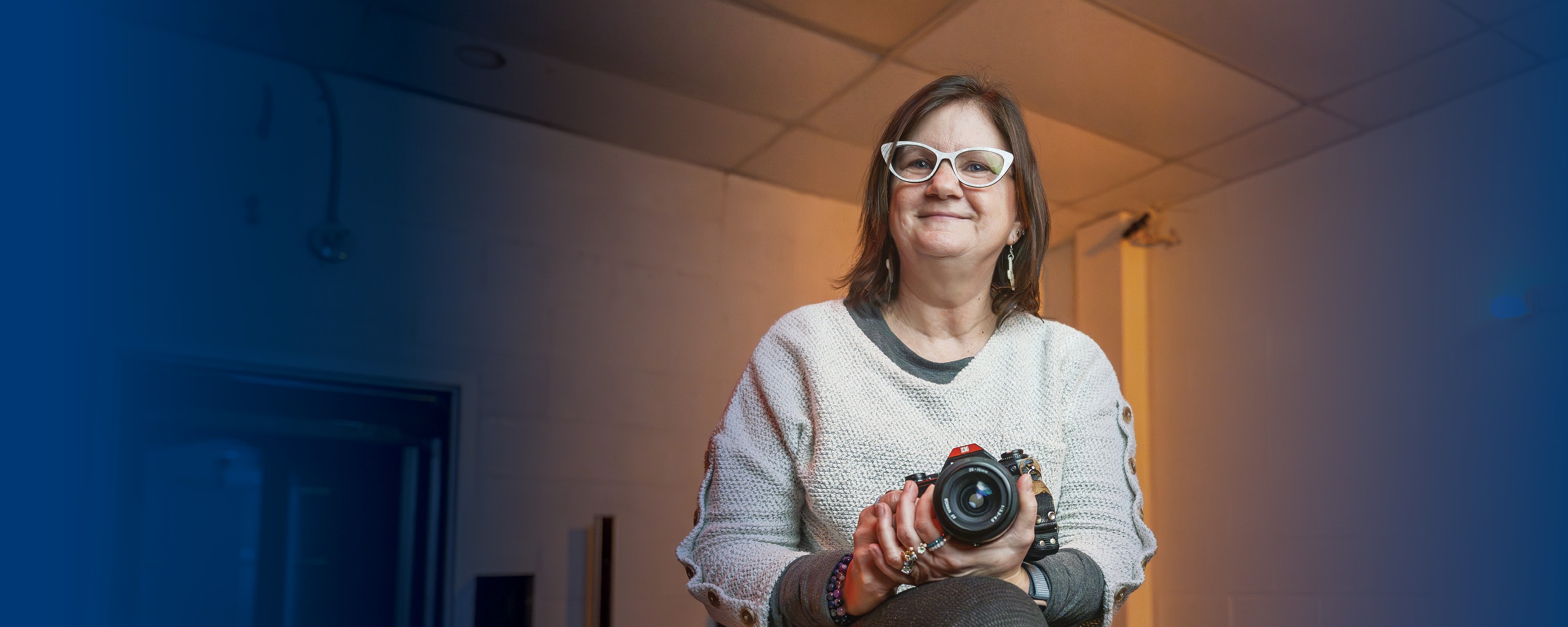
For Kent State University alumna and Northeast Ohio art educator Jennifer Thompson, art – and Kent State in particular – have been a lifelong part of her story, beginning in her pre-teen years.
“My connection to Kent State University began long before I was a college student,” Thompson said. “In middle school, I saw flyers for the Saturday Art Program at KSU, and my mom enrolled me in a clay class. Years later, during my undergraduate studies, I returned to those very classrooms, this time as the teacher.”

While Thompson initially started college at another university, it was ultimately at Kent State’s College of the Arts where she found her fit, earning both her bachelor’s degree and master’s degree in art education here in 1995 and 2003, respectively.
“Before transferring to Kent State, I attended a different university where I constantly felt torn between art and education,” she said. “That program lacked the depth in art education I was looking for, and, at the time, I didn’t feel confident enough to pursue Kent. But when I finally applied and started in 1991, it felt like coming home.
“What I loved most about the program was its structure,” Thompson added. “We were immersed in art experiences our first year, grounding us in both theory and authentic practice. Many universities wait until student teaching to provide real classroom experiences, but Kent integrated them early and consistently. I originally planned to pursue art therapy after graduating, but I realized how much I loved the classroom. Teaching gave me the opportunity to reach countless students, many of whom might never have the chance to access therapeutic experiences, through the power of art.”
Today, in her role as both an art educator at Solon High School and as president-elect of the Ohio Art Education Association (OAEA), Thompson is passionate about the wide-ranging benefits and important role art plays in students’ lives. She has been teaching in Solon City Schools since 1997 – first as a K-6 teacher and then during the 2010-2011 academic year she transitioned to high school, where she teaches a wide range of media and levels, including Drawing I and II/Printmaking, Ceramics I and II, Painting I and II, Photography I and II, Advanced Studio, AP Drawing, and Computer Graphics I. Thompson says she values staying current with evolving media so students can explore diverse forms of artistic expression. Creating a safe space for all types of learners was something that Kent State instilled in her as a teacher.
Kent State taught me that art and community are inseparable, Thompson said.
“The program built a foundation for working with students with exceptionalities, nurturing my ability to create accessible, meaningful experiences for all learners. My education at Kent encouraged me to develop a voice through my artwork, something I now pass on to my own students. Because of that foundation, my teaching and my art practice are deeply connected to my students’ lives and the communities they come from. It has made my teaching richer, more empathetic and more intentional.”
Thompson wants people to understand that creating art and art classes mean so much more than simply an extracurricular. She believes it is an important mode of expression that often gets taken away from students in order to prioritize reading and math. She sees firsthand how learning to express oneself through art can help develop well-rounded thinkers and communicators who can excel in any field.
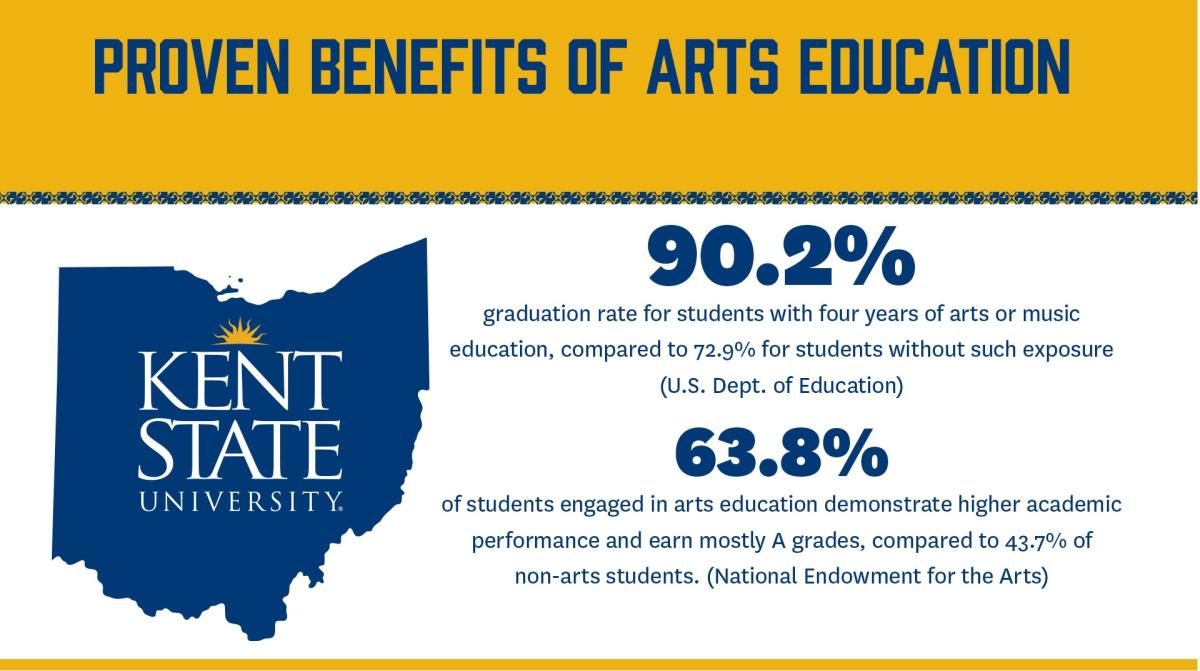
“Art uses math, science, literacy and problem-solving. Yet society often treats it as expendable,” she said. “I remember someone telling me once, ‘If my child couldn’t read, I’d hire a tutor. But if they couldn’t do art, I’d just let it go.’ As a parent of two daughters, one now an art teacher and one a nursing assistant, I saw firsthand how art gave them both choices and ways of learning that differed from my own. If we remove art, we remove opportunities for students to explore, take risks, make mistakes, think critically and discover who they are.”
Art shapes well-rounded humans because it shapes how they see, interpret and understand the world. – Jennifer Thompson
A Passionate Advocate for the Value of Arts Education
In addition to teaching and working as an artist, Thompson believes that art advocacy is critically important today.
“Art advocacy means championing visual arts education as an essential component of a well-rounded education. It involves ensuring equitable access to high-quality instruction, supporting art educators professionally, and helping policymakers recognize the academic, social-emotional and cultural impact of the arts,” Thompson said.
“Through my work with the Ohio Art Education Association, I support this mission in several ways. I help create platforms where educators can share successes, challenges and best practices through conferences, publications and professional learning communities. For the past 10 years, I have served on the student programming committee, organizing the OAEA Emerging Artists Show – an essential advocacy initiative that highlights student talent and the importance of arts education statewide.”
While she hopes to strengthen this message in the classroom and through OAEA, Thompson’s vision for art advocacy expands beyond Ohio.
“I want art to be universally recognized for the power it holds,” she said. “Art brings communities together, fosters empathy and helps us understand one another. I hope for a future in which art educators no longer have to prove the value of the arts but instead can focus on expanding and deepening their impact. Art is not an ‘extra,’ it is essential. My vision is to see that truth acknowledged and strengthened in every school.”
Nationally, Thompson has been involved with the National Art Education Association (NAEA) through the Connected Arts Networks program, conducting action research focused on equitable teaching practices. Through collaboration with educators across the country, members share strategies and collect data that demonstrate student growth and the impact of arts education, Thompson said.
“At its core, art advocacy is about sustainability and equity, ensuring that every student, regardless of zip code, has access to meaningful creative experiences,” she said. “Through my leadership at OAEA and involvement with NAEA, I am able to combine teaching, collaboration and strategic communication to help protect and expand those opportunities.”
From Teaching Art to Making Art
As a working artist, Thompson says she regularly exhibits her work, though teaching remains her primary focus. “I have shown work in educator exhibitions at Ohio University and in the Duality Shows at Kent State University, where I received both first place and People’s Choice awards. I also earned first place for my ink drawings in Coventry. Most recently, I have exhibited work at Door 2 Art Studio [in Hudson, Ohio],” she said.
Personally, Thompson works in a variety of media, with a particular love for wet and dry felting and ceramics. “My ceramics practice has been deeply influenced by the late Kirk Mangus at Kent State University,” she said. “Beyond gallery work, I have created watercolor commissions for a local realtor, painted furniture and a mural for a local restaurant, and photographed three weddings.
“More important than my personal artistic accomplishments are my students’ achievements,” she noted. “I measure success through their growth and accomplishments. Former students have become art educators themselves. Many have earned Gold Key, Silver Key and Honorable Mention awards in the Scholastic Art & Writing Awards, even receiving Gold and Silver keys nationally in the Scholastic competition. Students have exhibited in the Congressional Art Competition and received recognition from the Ohio House of Representatives, participated in the Ohio Governor’s Art Show, and gone on to successful careers as freelance artists.”