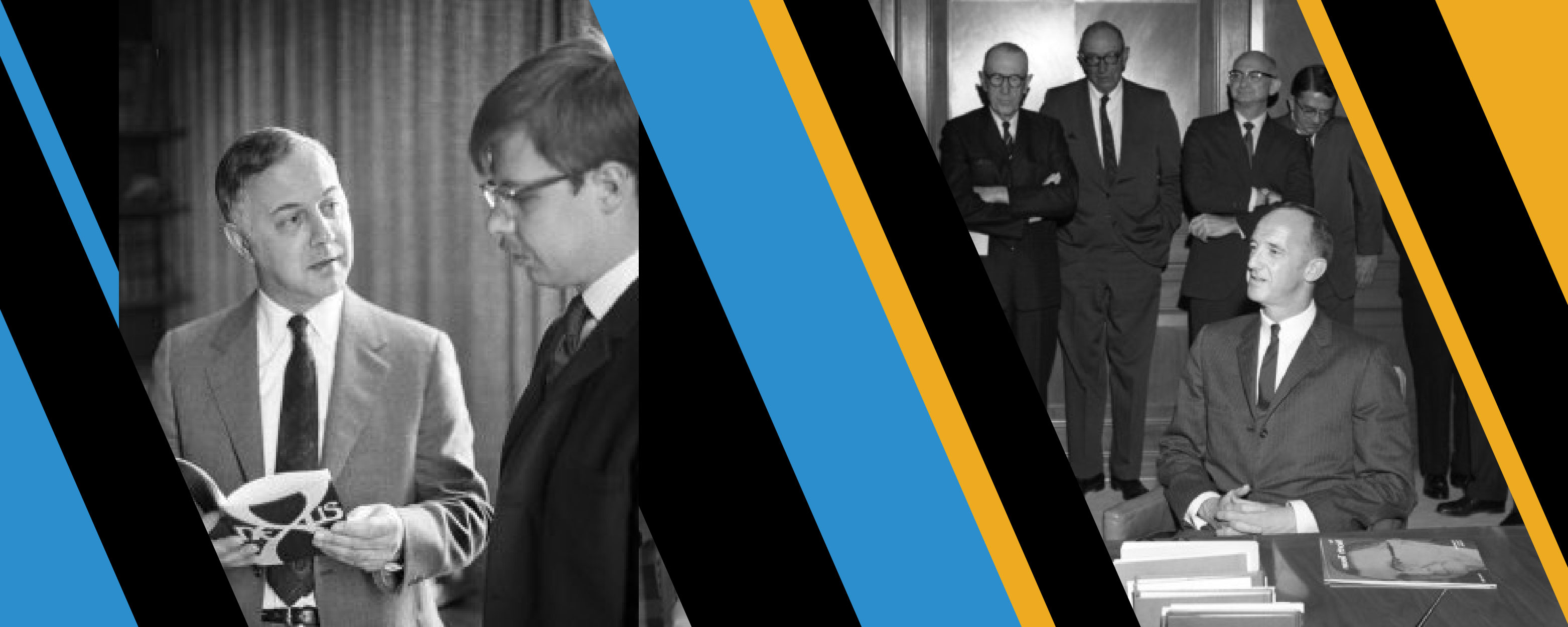
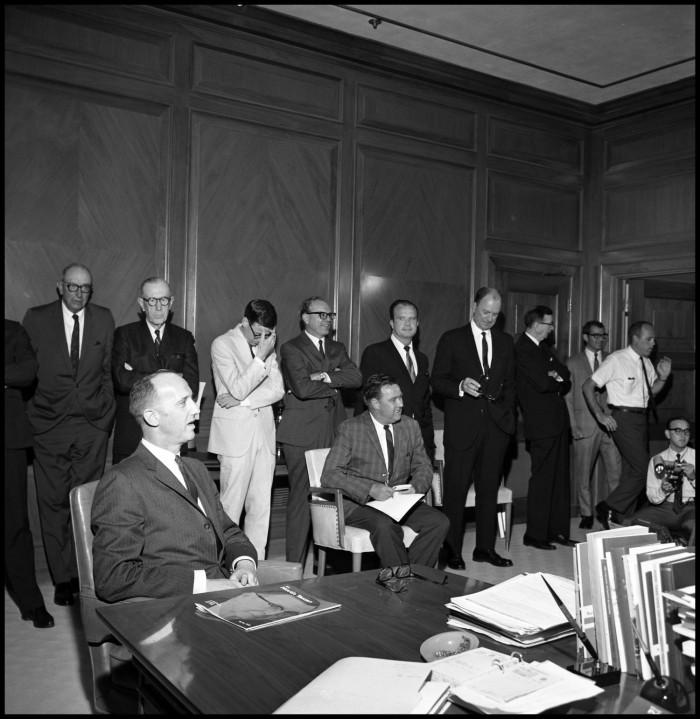
On May 4, 1970, Brage Golding, Ph.D., who would become Kent State University’s eighth president in 1977, was serving as the first president of Wright State University, where he was inaugurated in 1966. At the same time, John J. Kamerick, Ph.D., who had been a dean and a provost at Kent State from 1954-1968, was the president of North Texas State University, (now known as the University of North Texas).
At the time, both presidents were facing troubled times on their campuses – as were administrators at universities and colleges across the nation – with growing student unrest and protests about the war in Vietnam and Cambodia as well as civil rights protests by Black students.
In the aftermath of the shootings at Kent State and the later shootings at Jackson State, both presidents had to determine how to best address the concerns of their students and ask for restraint, constructive dialogue and peaceful assembly. Their well-intentioned efforts were met with decidedly different reactions.
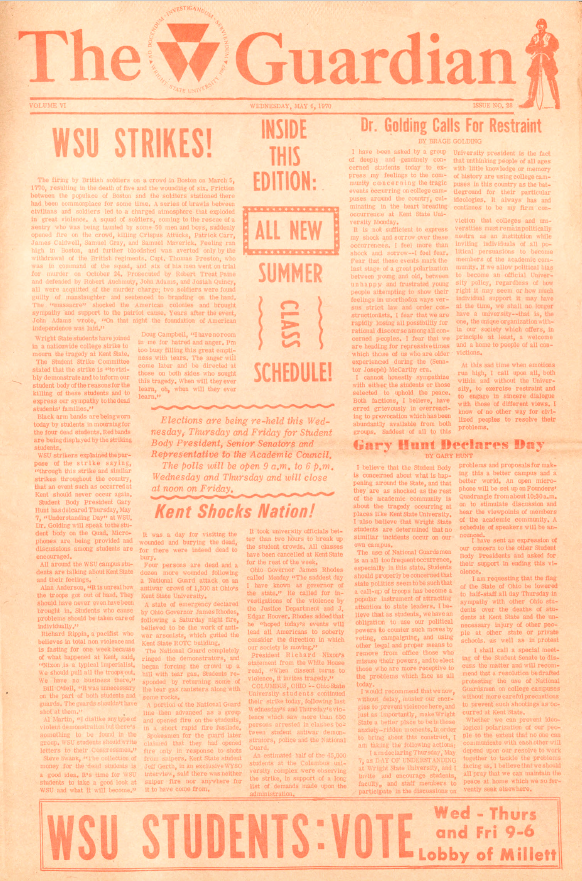
A Crisis on Two Fronts: Wright State University, May 6, 1970
In a special edition of the university’s student newspaper, The Guardian, President Golding wrote a thoughtful and heartfelt message to the student body, acknowledging the tragedy and appealing for peace on campus, for the preservation of their institution. It was included on the front page, next to a story about students at Wright State joining the national student strike.
The text of Golding’s message read:
Dr. Golding Calls For Restraint
BY BRAGE GOLDING
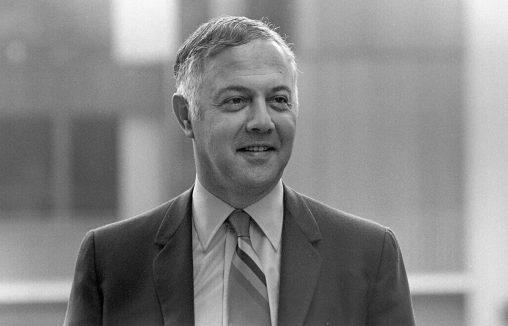
I have been asked by a group of deeply and genuinely concerned students today to express my feelings to the community concerning the tragic events occurring on college campuses around the country, culminating in the heartbreaking occurrences at Kent State University Monday.
It is not sufficient to express my shock and sorrow over these occurrences. I feel more than shock and sorrow—I feel fear. Fear that these events mark the last stage of a great polarization between young and old, between unhappy and frustrated young people attempting to show their feelings in unorthodox ways versus strict law and order constructionists. I fear that we are rapidly losing all possibility for rational discourse among all concerned peoples. I fear that we are heading for repressiveness which those of us who are older experienced during the (Senator Joseph) McCarthy era.
I cannot honestly sympathize with either the students or those selected to uphold the peace. Both factions, I believe, have erred grievously in overreacting to provocation which has been abundantly available from both groups. Saddest of all to this University president is the fact that unthinking people of all ages with little knowledge or memory of history are using college campuses in this country as the battleground for their particular ideologies. It always has and continues to be my firm conviction that colleges and universities must remain politically neutral as an institution while inviting individuals of all political persuasions to become members of the academic community.
If we allow political bias to become an official University policy, regardless of how right it may seem or how much individual support it may have at the time, we shall no longer have a university—that is, the one, unique organization within our society which offers, in principle at least, a welcome and a home to people of all convictions.
At this sad time when emotions run high, I call upon all, both within and without the University, to exercise restraint and to engage in sincere dialogue with those of different views. I know of no other way for civilized people to resolve their problems.
The Important Context of Golding’s Message
Golding’s mention of Sen. Joseph McCarthy in his message was intentional and cautionary. In bringing up the figure behind “The Red Scare” and subsequent communist witch hunts of the 1950s, Golding was sending two messages. The first was for students to warn that violent protests would give the government a “law and order” excuse to make arrests and infringe on civil liberties. The second message was for the general public, to caution against broad-brush vilifying student protestors as “traitors” or “radicals.”
The ‘Concerned Students’
The “group of deeply and genuinely concerned students” Golding references were the Committee for the Advancement of Negro Education (CANE), later renamed the Committee for the Advancement of Black Unity (CABU).
The shootings at Jackson State happened just days after the deaths at Kent State and tensions on campus grew, as Black students at Wright State felt that the lack of national outcry over the killing of Black Students pointed out a racist, double standard.
The president had met with the group following a campus rally and the students, while satisfied with the president being “heartfelt and honest,” used the “restraint” and “sincere dialogue” called for in Golding’s message to present a formal list of demands to improve the university atmosphere for Black and minority students.
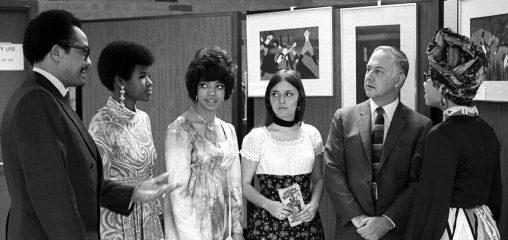
True to his principles of “rational discourse,” Golding agreed to most of the students’ demands, which led to the founding of the Bolinga Black Cultural Resources Center at Wright State, along with improvements in other university efforts in the recruitment of Black students and faculty, inclusion of a Black Studies curriculum and an examination of discriminatory and biased practices at the university.
Some tensions lingered, however. In December 1970 members of CABU organized a sit-in in Golding’s office to protest the firing of a Black employee and indicated that they were willing to move beyond "restraint" if the university began to backslide on its promises.
Meanwhile in Texas
At North Texas State University, President Kamerick’s reaction to the events at Kent State on May 4, 1970, was deeply personal, as he had been a part of Kent State's administration for 12 years, first as assistant dean of the College of Arts and Sciences, then dean of the College of Fine and Professional Arts, and finally as academic vice president and provost.
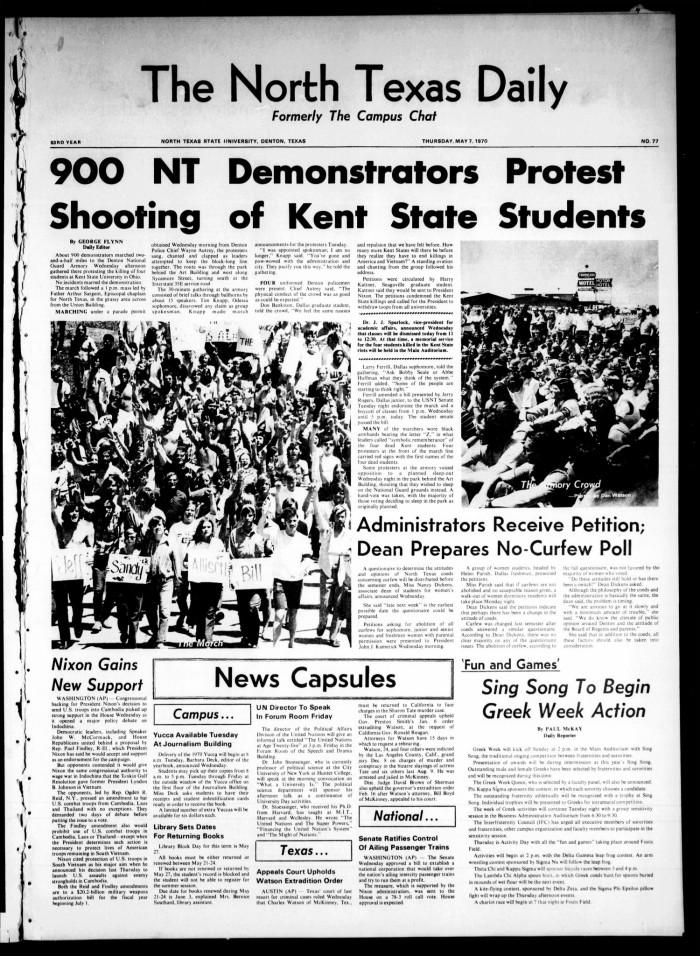
On May 5 and 6, 1970, Kamerick saw that student outrage and anger over the student deaths in Ohio was reaching a boiling point. Students were planning a march on the nearby National Guard Armory in Denton. Deeply concerned that this protest could end in tragedy in the same way it did at Kent State, Kamerick met with students to appeal for calm, warning that campus demonstrations could quickly turn deadly.
As an alternative to the march, Kamerick proposed a memorial observance in the campus auditorium with an offer to dismiss classes to allow all students to attend. He also asked students who indicated that they still intended to march on the armory to apply for a parade permit. Even if it were denied, he said, it could provide them with some legal protection.
Rejection and Anger
With emotions high and anger fueled by influential student activists, the students met the president’s presence and requests with hostility. They saw the staging of a memorial service indoors as an attempt to hide their protest from public view and provide a “sanitized” response to what they felt was the murders of students in Kent.
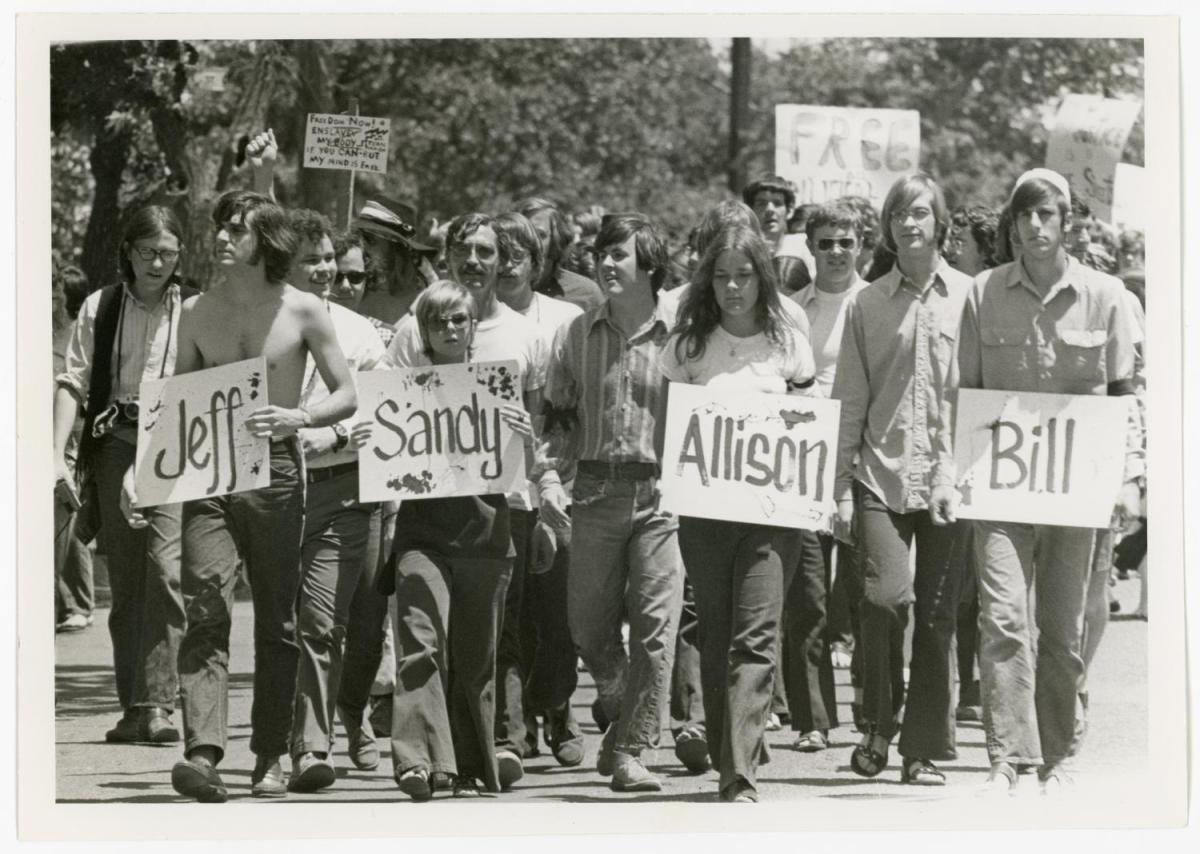
The students voted against the memorial service, and the march proceeded as planned. A group of about 100 students crossed campus and lowered the American and Texas flags to half-staff. Then, carrying four black wooden coffins they had constructed to represent each of the four students who were killed at Kent State, they marched to the National Guard Armory in Denton, carrying signs that bore the names of the victims and others reading “Who’s Next?” and “End the War.” One of the student leaders of the protest, Julian "Rusty" Williams, said in an online post from 2016, "The names of the four dead in Ohio were written on a signboard in red tempera paint. One woman said the signs didn’t look angry enough, and she began dripping red paint on the signs like bloodstains. On the morning of the march, several people cut themselves to drop their own blood on the signs."
When the students reached the armory, the protest remained non-violent but extremely tense as the students confronted the guardsmen with the symbolic coffins in a silent vigil.
Demoralized and Defeated
President Kamerick was distraught that his proposed memorial event was ignored and the march to the armory proceeded. As these events were unfolding, Kamerick sent telegrams to the families of each of the four Kent State students who had died. The students at North Texas State rejected the kind gesture as “too little, too late,” and instead called for the president to take political action and call for an immediate withdrawal of U.S. troops from Cambodia.
Kamerick felt drained from the stress of managing these protests and disappointed in himself for losing control of the situation. All of this, combined with a continued cold reception from the North Texas State student body, contributed to his decision to leave the university and assume the role of president and professor of history at the University of Northern Iowa.