10 Language Translation Industry Trends and Statistics for 2026
REQUEST INFORMATION
Contact us today to learn more about our program.

From the rise of AI and transcreation to increased demand for B2B localization, there are many trends and new tools emerging in the translation industry. Here’s a closer look at the translation industry trends shaping 2026 and how translation professionals collaborate and communicate with the rest of the world, connecting people from different cultures.
10 Trends We Expect to See More of in 2026
1. Increased Adoption of Machine Translation
MT engines (machine translation systems) and AI-powered translation tools are used to achieve quick translations, which is causing many companies to adopt them for their language needs. However, the translations generated must still be reviewed and edited by humans to eliminate errors and mistranslations.
2. Growth in Transcreation
Transcreation adapts and often reimagines content from one language to another while maintaining the tone, intent, and style of the original. This approach is critical when companies sell products and services to international audiences, and the growth in transcreation usage increases the demand for translators who can effectively adapt brand messaging and creative content.
3. Increased Demand for B2B Localization
In 2026, more B2B companies are expanding internationally and focusing on customer experience, which plays a major role in loyalty and retention. For global brands, this includes the need to adapt content, communication strategies, and marketing to appeal to organizations and individuals around the globe.
Customization like this incorporates many elements, including tailoring messaging to targeted markets and respecting cultural intricacies. This creates a need for skilled translators who have subject-matter expertise in business or the specific industry the company operates within.
4. Increased Demand for Small Businesses
The demand for language services continues to expand, with small and medium-sized businesses increasingly seeking language translation services alongside large multinational corporations. In 2026, the translation industry is experiencing a trend of more small and medium-sized businesses seeking language translation services. Local and state governments, nonprofits, educational institutions, and healthcare organizations are also recognizing the growing importance of effective communication across languages.
As a result, the language services industry is seeing continued growth among SMBs and public-sector entities, driven by the increased need to engage with a multilingual audience effectively, with translation industry trends in 2026 pointing to continued expansion.

5. Increased Demand for Audio and Video Translation
As audio content continues to grow in popularity, demand for translation and localization is rising to help content reach global audiences. This includes specialized work with podcasts (which require transcription and translation), audiobooks, music, and other audio formats to ensure diverse audiences can access these forms of media.
Video content presents similar localization demands. Since large audiences are online and consuming video content, services like dubbing and subtitling are becoming more popular. According to Mordor Intelligence, YouTube sees more than 360 hours of video content uploaded every minute, with approximately 5 billion videos being watched daily by users in 2025.
6. Diversification of Language
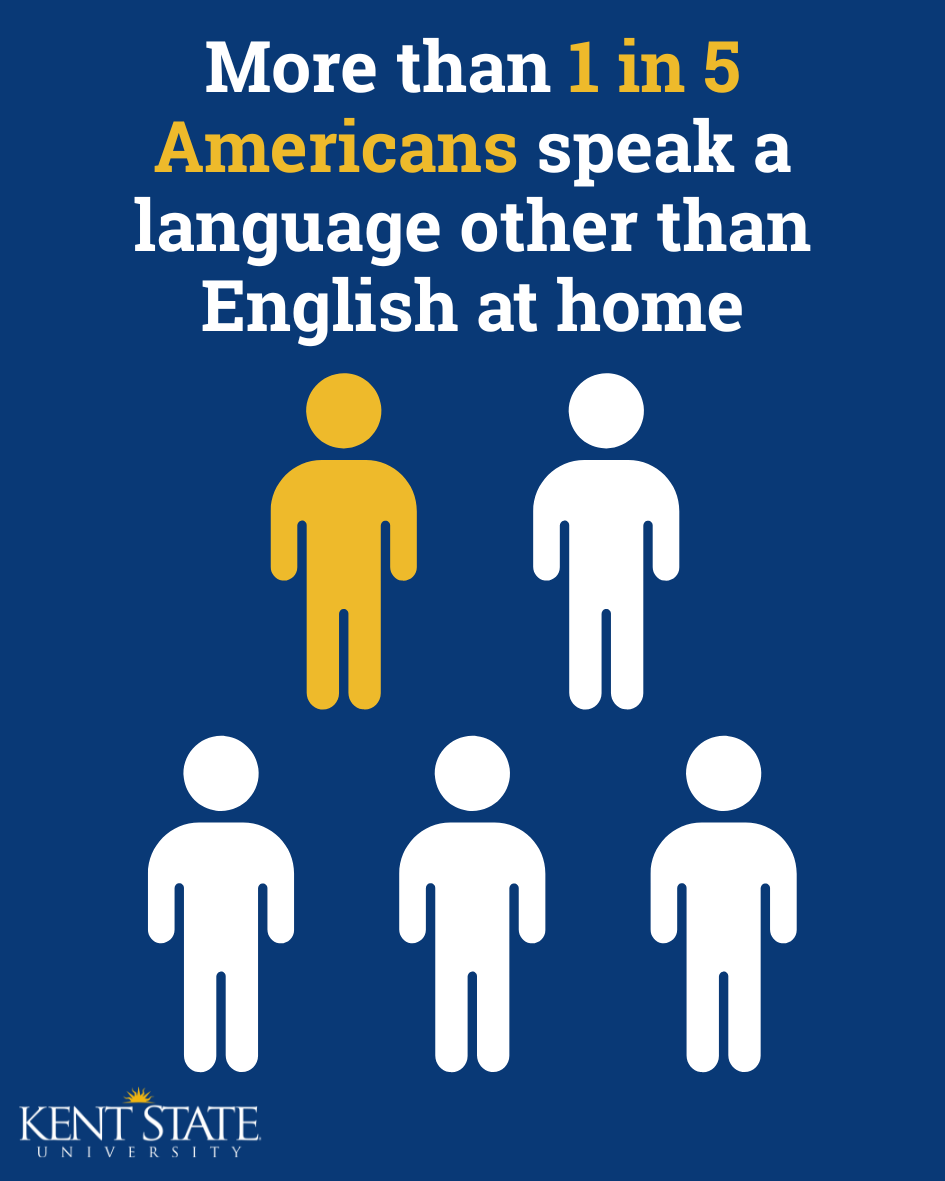
According to the U.S. Census Bureau’s American Community Survey, more than 1 in 5 Americans (22%) speak a language other than English at home, reflecting significant linguistic diversity across the United States.
This number has nearly tripled over the last 40 years, starting at 23.1 million in 1980 and reaching 67.8 million in 2019. Spanish is the most commonly spoken non-English language, used by 42 million people, followed by Chinese, which is spoken by over 3 million people.
In light of these facts, companies are investing more in translation services to create marketing materials, websites, and customer support in multiple languages to effectively serve increasingly multilingual customer bases.
7. Increased Importance of Multilingual Customer Support
Customers want to see that businesses are able to support them in their native languages. Multilingual support expands market access and enables communication between companies and customers from diverse linguistic backgrounds. This can range from live chat and over-the-phone support to translated customer support materials and beyond.
8. Increased Internet Usage
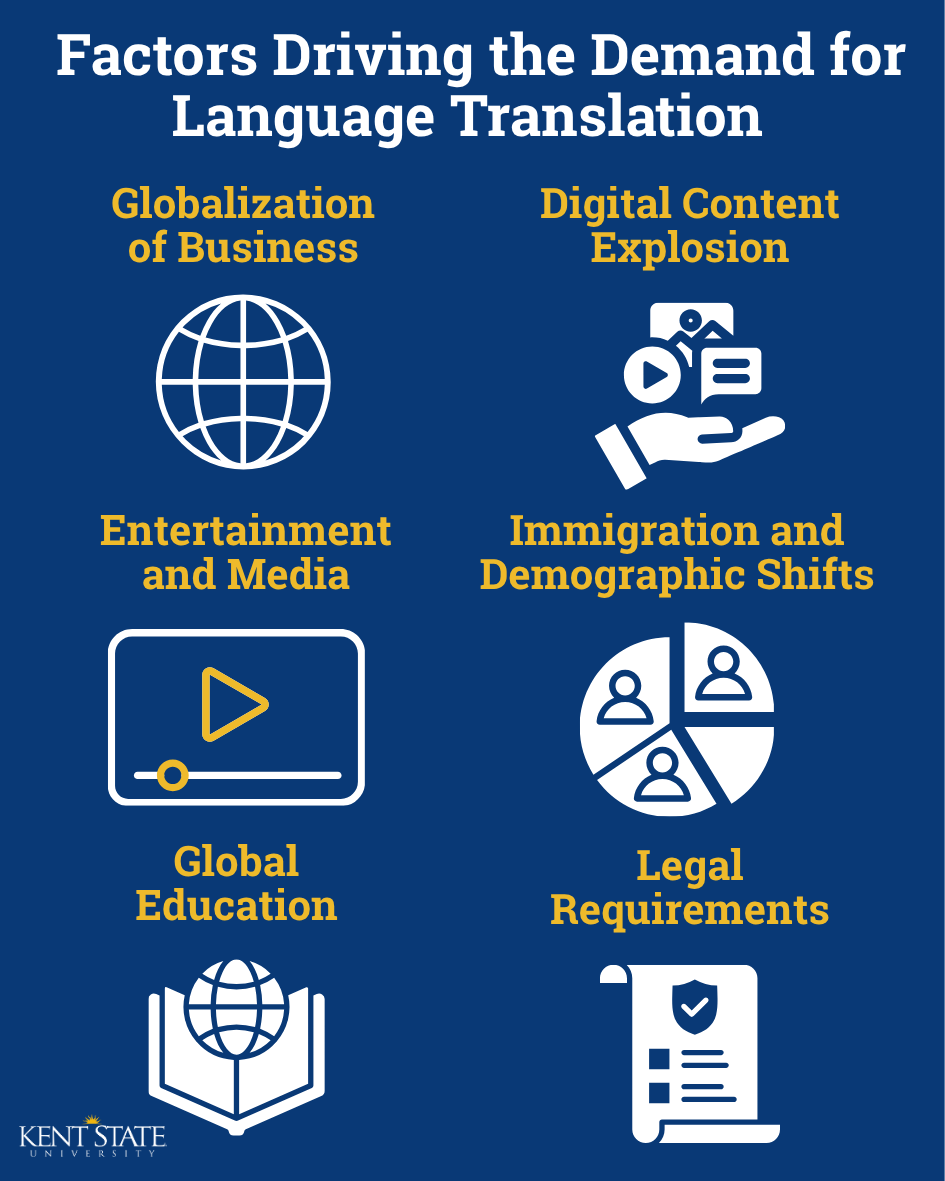
In 2026, the continued expansion of remote work and digital commerce drives demand for language translation services. The growth of remote work and virtual collaboration has heightened the demand for real-time translation services, such as live interpretation for virtual meetings and webinars, with companies placing greater emphasis on cross-cultural collaboration and hiring internationally.
Other factors contributing to the increased demand for language translation include the expansion of online education platforms such as Coursera, edX, LinkedIn Learning, and Udemy, as well as the rise in digital content consumption on streaming platforms like Netflix, YouTube, and Amazon Prime.
9. Real-Time Multilingual Collaboration
Real-time collaboration tools are redefining expectations for what translation and localization services can deliver. Translation industry trends for 2026 show a shift toward accelerated workflows and real-time solutions, increasing expectations for speed and accessibility in everyday business communication. Teams can expect cross-border meetings to flow more naturally and support calls to be accessible in a wider range of languages.
10. Generative AI and LLMs
Generative AI and large language models (LLMs) are transforming translation workflows by rapidly producing multilingual content for marketing campaigns and product materials. Because LLMs process broader context, they help maintain coherence across longer content segments compared to traditional machine translation systems.
What Does All This Technology Mean for Translators?
One concern recently has been the rise of AI, but translators remain essential because machine translation systems and AI-generated content are unable to capture cultural nuances.
According to Mordor Intelligence, North America has the largest market for translation services, with continued growth driven by international business expansion and increasing linguistic diversity.
As the population shifts, the need for effective language services increases, therefore increasing the need for qualified translators. In 2026, the language services market size is expected to reach $65.5 billion. By 2028, the market size is expected to hit $98.11 billion, which is a CAGR of 6.32%.
Projections for the Industry
From 2022 to 2032, employment of translators and interpreters is projected to grow 4%. Driven by globalization and international market expansion, demand for translators is increasing across many industries.
According to the U.S. Bureau of Labor Statistics, approximately 7,200 translator and interpreter positions are expected to open annually over the decade. These projections indicate strong career opportunities for graduates entering the field with specialized translation training.
Key Things to Take Away
The fundamental purpose of translation has always remained the same: to enable effective communication while ensuring accuracy, precision and clarity. Despite advancements in artificial intelligence and machine translation, human review by professional translators remains essential to ensure quality and accuracy.
As you navigate translation industry trends for 2026, keep in mind that this industry serves as the foundation for global connectivity through language. Stay ahead of emerging trends, as professional translators play a vital role in shaping communication in an increasingly interconnected world.
Apply to Kent State University Today
Get involved with the future of translation and localization to take part in new trends and secure a career that aligns with your professional goals. Whether you’re a mid-career professional considering a career in transition, a language teacher looking to establish a freelance practice, military personnel planning civilian career paths, or a working translator seeking formal credentials, Kent State’s M.A. in Translation program can help you reach these goals.
Start by earning your M.A. in Translation from Kent State to set yourself apart from other job candidates and strengthen your translation skills. Request more information about our program today to learn how we can help you advance your career in professional translation and localization.