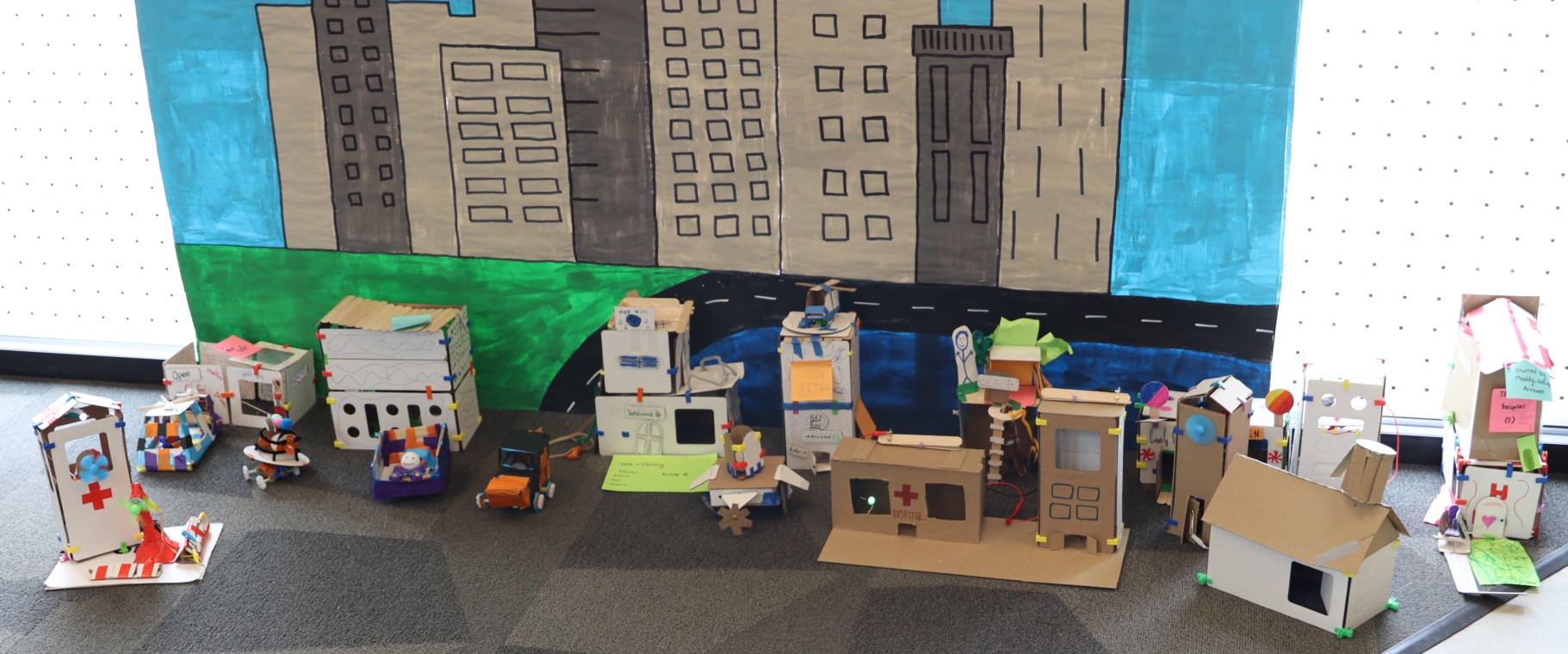
A tree house with a welcome sign etched in Braille. A candy shop with a ramp for accessibility. A windmill-powered hospital. A ‘hovercraft’ combination car and boat. A hotel that houses a rooftop heliport.
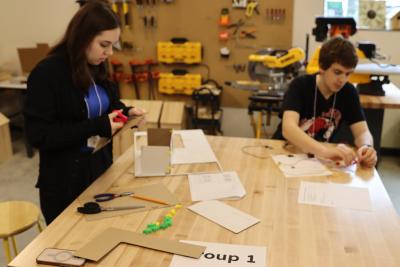
These were not the inventions of world-renowned architects, ingenious engineers or overzealous city planners, but just some of the clever creations of local students who developed prototype inventions connecting their very own ‘Smart City’ during the Future Innovators Summit, presented by Kent State University.
The event was held recently at The Vivian von Gruenigen, MD, STEM Center of Excellence on the Daley Family Campus for STEM Innovation at Camp Ledgewood in the Cuyahoga Valley National Park. The summit solidified a partnership with the Girl Scouts of Northeast Ohio and NEOnet by bringing together dozens of local students in grades 3–12 for an immersive, "smart cities" design challenge.
"True sustainability can only be achieved when we understand that no system operates in isolation," said Annette Kratcoski, director of RCET. "This summit demonstrates the immense value of collaboration and inclusivity. By teaching students to think in terms of interconnected systems, we empower them to design integrated solutions where energy, transportation, and community spaces work together to support a healthier, more sustainable future."
This collaborative event grew out of deep conversations with partner schools seeking meaningful ways for students to engage in collaborative design challenges. The endeavor highlights the long-standing commitment of Kent State University’s Research Center for Educational Technology (RCET) and its College of Education and Human Services (EHS) to expand impactful STEM opportunities for K–12 institutions across Northeast Ohio.
A Unified Community Ecosystem
The foundational framework of the challenge relied heavily on interconnected systems design. Rather than working in isolation, student teams collaboratively designed specific, complementary components of a unified "Smart City" community ecosystem. Attendees were pushed to evaluate how distinct infrastructure elements work together to support a thriving, sustainable place for citizens to live and work.
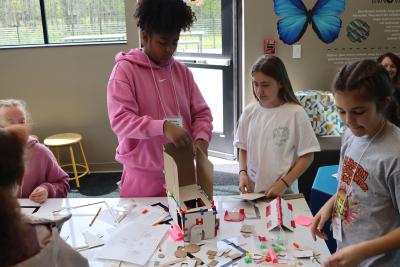
To guide their prototype models, students addressed four critical, real-world questions:
- Who are we designing for?
- How do people move through the community?
- How are spaces powered?
- How do all these systems support each other?
Differentiated Challenges by Grade Level
Using engineering materials provided by 3DuxDesign in New York City, the activity was structured to emphasize creativity, system dynamics, and real-world problem-solving. The design parameters were carefully differentiated across three distinct age groups:
- Grades 3–5 (Elementary): Focused on structures, inclusive buildings, and public spaces.
- Grades 6–8 (Middle School): Focused on transportation systems optimized for moving people or products.
- Grades 9–12 (High School): Focused on energy systems, micro-grids, and the electronic components required to power the community.
Expert Coaching, Corporate Support and Educational Perspectives
The execution of the summit was enhanced by a growing partnership between RCET and Progressive Insurance, based in Cleveland. Following a visit to the campus center last spring, Progressive representatives committed to supporting the event by providing professional innovation coaches. These corporate mentors worked side-by-side with the student teams, guiding their technical frameworks and strengthening team collaboration throughout the design process.
"Expert coaching bridges the gap between raw student creativity and structured, real-world problem solving," stated Molly Klodor, Instructional Technology Coach for Chagrin Falls Schools. "When students are paired with dedicated STEM mentors, it changes their perspective entirely. The coaches don’t just offer technical answers, they ask probing questions, push boundaries, and give students the confidence to experiment, make mistakes, and discover solutions together as a team."
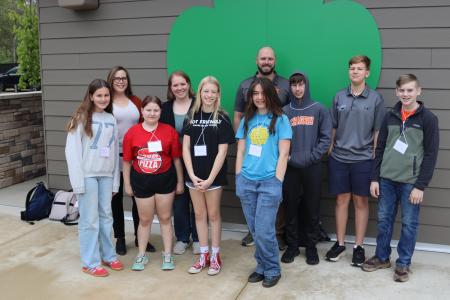
The leaders driving the initiative emphasized that the true success of the summit stretched far beyond the physical prototypes.
The long-term societal value of introducing these concepts to young learners early in their academic journeys was also a core focus of the event.
"Early exposure to STEM learning is absolutely vital for equipping our youth with critical problem-solving skills, and this is particularly true for young girls," said Alicia R. Crowe, interim dean for EHS. "Providing a supportive, collaborative environment allows girls to see themselves as engineers, scientists, and leaders. When we cultivate their creativity early on, we break down historic barriers and ensure diversity in the next generation of innovators."