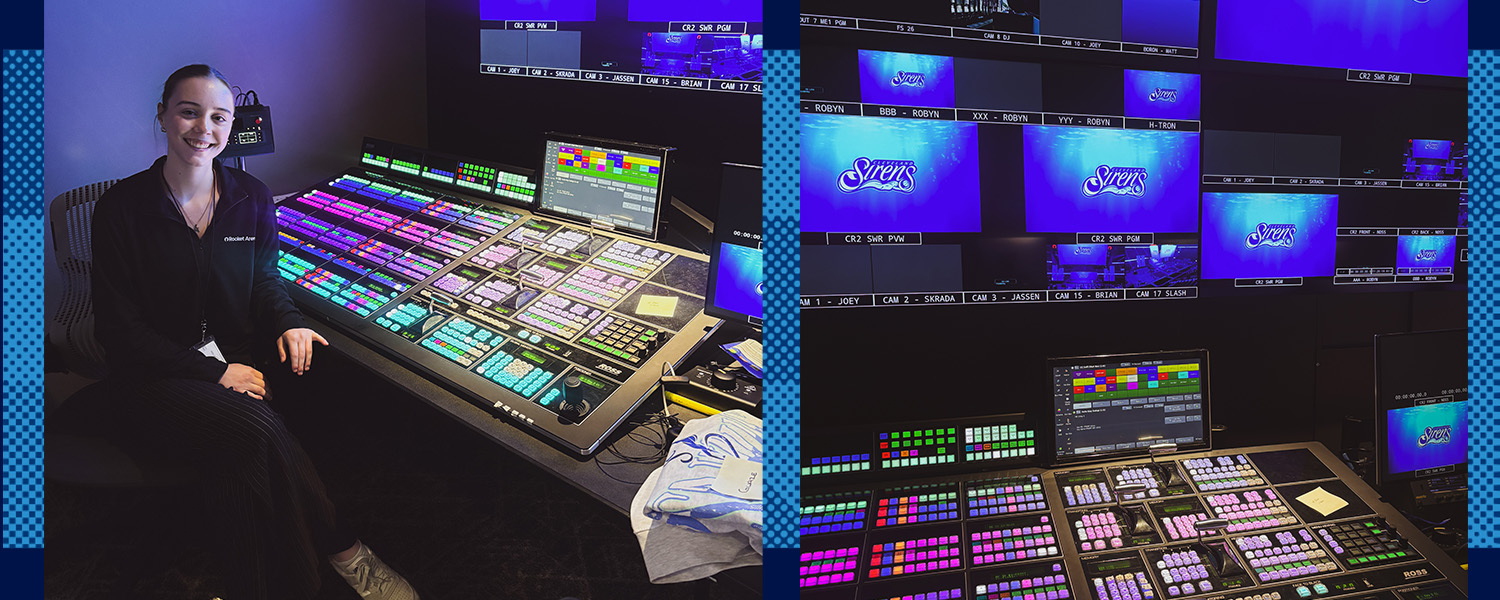

When Lillian Glaze agreed to work a studio show on Aug. 4, she thought she knew what she was signing up for. Then she opened the email.
“The WNBA launch,” it read.
Glaze, a junior visual communication design major at Kent State University from Reading, Pennsylvania, immediately realized the assignment was much bigger than she expected. She would be the technical director for the Women’s National Basketball Association (WNBA) brand reveal at Rocket Arena in Cleveland, helping bring the city’s newest professional sports team to life for thousands of viewers.
At age 19, Glaze was stepping into a professional production environment she once expected would be years away.
“Normally, it is kind of like a rite of passage in your senior year of technical director you get into Rocket Arena,” Glaze said.
For Glaze, that opportunity came much sooner.
Just three months earlier, she had worked her first event at Rocket Arena, serving as the technical director for a Cleveland Monsters hockey game. When the arena needed someone for the production, Glaze was recommended by name because of her previous experience technical directing productions at Kent State.
That first opportunity quickly turned into something much bigger.
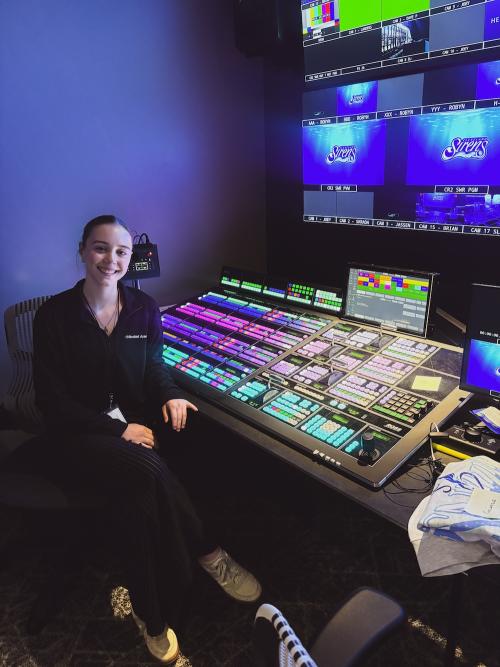
When Glaze arrived at Rocket Arena on Aug. 4, she signed a nondisclosure agreement and was immediately immersed in the production. Her second event at the arena would be one of Cleveland’s biggest sports announcements of the year: the reveal of the city’s new WNBA team, the Cleveland Sirens, its branding and its place in Cleveland’s professional sports ecosystem.
As technical director, Glaze was responsible for one of the most important jobs happening behind the scenes. Seated behind a video switcher, she watched multiple camera feeds and production elements at once, making split-second decisions about what the audience would see on screen.
A camera might capture a player while another feed might show the crowd. Graphics, video packages and replays could all be ready to roll. Glaze’s job was to take the direction coming through her headset and make those pieces appear at exactly the right moment.
“[The technical director is] basically the one that’s live editing the show,” Glaze said.
For Glaze, the significance of the night did not fully sink in until after the production was over.
“I don’t really watch my shows back unless I’m making a demo reel, but I watched back the WNBA stream because I was like, wait, 20,000 people saw this; maybe I should watch this back,” she said.
This time, viewing the production was different. Glaze was watching a moment she had helped create as it unfolded on screen, knowing that thousands had experienced it in real time.