
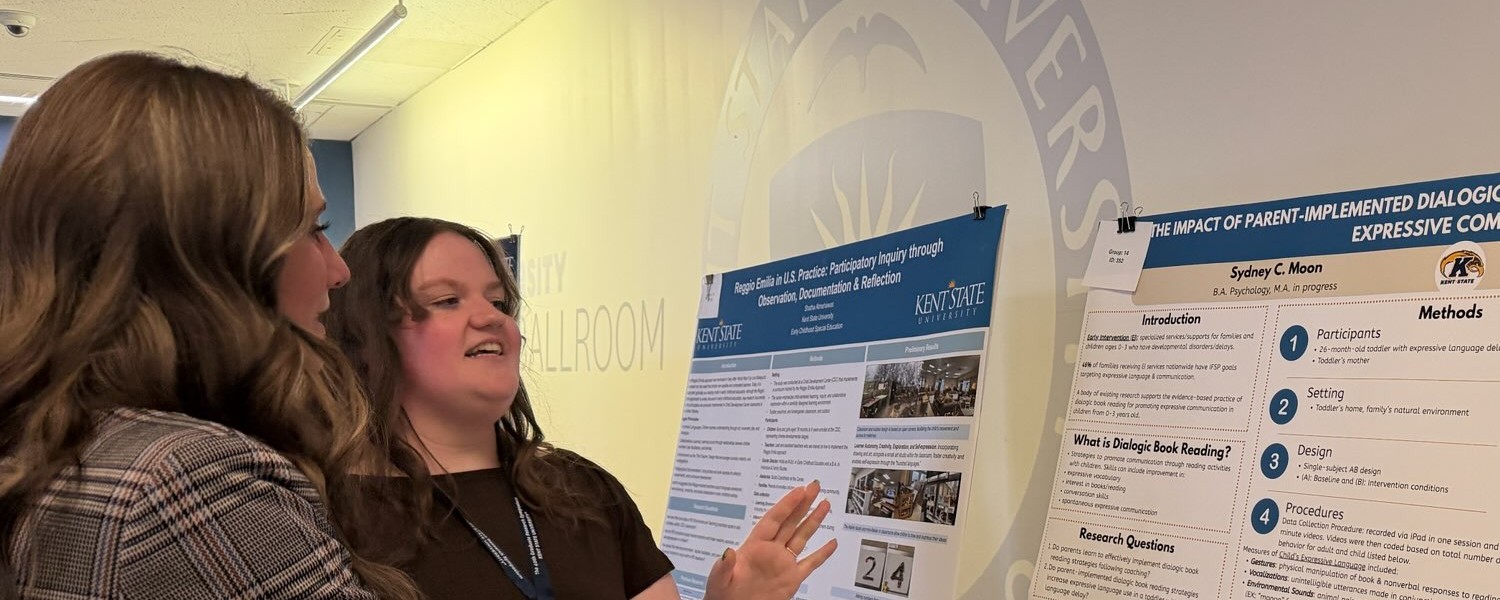
When Jessica Howiler steps into a family’s living room, she brings more than professional expertise. She brings a worldview shaped by years of studying and practicing Early Intervention across continents — and a deep commitment to the community where she first discovered her calling: Portage County, Ohio.
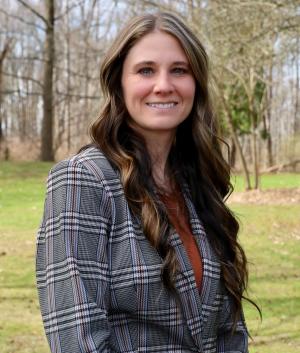
Currently working as a Developmental Specialist and Early Intervention Supervisor at the Portage County Board of Developmental Disabilities, Howiler’s professional path began at Kent State University’s College of Education, Health and Human Services, where she completed her early childhood special education master’s degree with Early Intervention certification while completing her undergraduate studies.
“I was born and raised at a nursing home,” she said. “My mom did social work and recreation therapy there my whole life. I always knew I wanted to do something in education and work with people – and children – who needed extra support.”
At Kent State, Howiler found the Early Intervention Graduate Certificate program in the School of Lifespan Development and Educational Sciences that emphasized standardized practices and real-world applications—preparation that stayed with her throughout her career. Providing full scholarships funded by the U.S. Department of Education, Kent State’s Early Intervention Certificate program prepares students to work in EI systems in Ohio and beyond, directly servicing families with infants and toddlers up to three years old.
“Kent State was so big on best practice and evidence-based processes,” she said. “Not just flying by the seat of your pants. That really stuck with me, and it still guides how I work today.”
Her career took her beyond Ohio, including professional work overseas supporting military families in Okinawa, Japan.
“One thing I appreciated about working overseas was that the training and guidance came directly from the federal government,” said Howiler. “There wasn’t that risk of the message getting lost. You knew exactly what ‘best practice’ was supposed to look like.”
Those experiences deepened Howiler’s understanding of families and cultures—and reinforced the importance of humility in the work.
“You don’t know everything,” she said. “Early on, I thought I did. But this work is about slowing down, building relationships, and meeting families where they are. You’re not there to overhaul their lives in one visit.”
Howiler returned to Portage County, Ohio, in a leadership role where she supervises the early intervention program that includes speech, occupational and physical therapists.
“It’s surreal sometimes,” she said. “Years ago, I was the new kid coming back to Portage County. Now I get to help guide the next generation. It really does feel full circle.”
Preparing a new generation through instruction and experience
Sydney Moon, who took first place in the Outstanding Poster Presentation category at Kent State’s Graduate Research Symposium, represents the next wave of Early Intervention professionals—students prepared through interdisciplinary coursework and immersive field experiences.
A psychology major with a minor in education as an undergraduate, Moon found her way to Early Intervention while preparing for a career in speech‑language pathology.
“I honestly didn’t even know the Early Intervention certificate existed at first,” she said. “But my intent has always been pediatrics. I’ve always wanted to work with kids, so when I learned about it, I thought, why not? What harm could it do?”
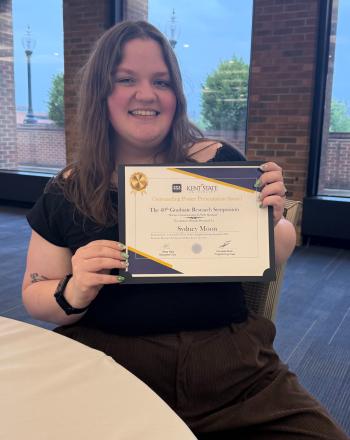
That decision led her to an internship with Portage County’s Early Intervention program, where she works under the leadership of experienced providers like Howiler.
“Early Intervention is all about visiting families in the home,” said Moon. “It’ varies. No two days are ever the same, and no two children present the same way.”
The experience has made Moon’s classroom learning tangible.
“In class, we talk about routines‑based intervention and coaching,” she said. “But it’s the home visits where it really clicks. That’s where you’re sitting with a family, listening to their priorities, and figuring out what actually works for them.”
Sydney also credits Kent State’s program structure with giving her purpose in the field.
“The project we’re working on gives me an end goal,” she said. “It forces me to really build rapport with a family and become an expert in what I’m doing. Without that, observation hours alone could feel kind of lost.”
A partnership rooted in shared purpose
The relationship between Kent State and Portage County is more than a placement site or pipeline—it’s a mutually reinforcing partnership.
- Kent State provides rigorous academic preparation, interdisciplinary coursework, and a strong emphasis on evidence‑based, family‑centered practice.
- Portage County provides mentorship, hands‑on experience, and a real‑world context where students can apply what they’ve learned.
- Children and families benefit from professionals who are both highly trained and deeply connected to the community.
Jessica Howiler sees the partnership as essential.
“I think it’s crazy not to support Kent State when they’re right here in our own county,” she said. “Every county has something to give students. And the more they experience different ways of doing Early Intervention, the more well‑rounded they become.”
“I feel supported academically and in the field,” said Moon, who feels support from both sides. “That combination is what makes me feel ready for this work.”
Passing the Torch
There’s something uniquely powerful about Jessica mentoring students who are walking the same academic path she once traveled.
“I see so much of myself in these students,” said Howiler. “They’re eager, they’re excited, and they want to know everything. That energy—it rejuvenates you.”
She sees mentoring as her responsibility and legacy.
“These students are our future and their work changes lives,” she said. “They’re the ones who are going to keep this program going. When we invest in students like Sydney, we’re investing in the future of Portage County.”
Sydney is inspired by that connection.
“Knowing Jessica came through the same program makes this experience even more meaningful,” she said. “It shows me what’s possible—not just as a student, but as a future professional.”