
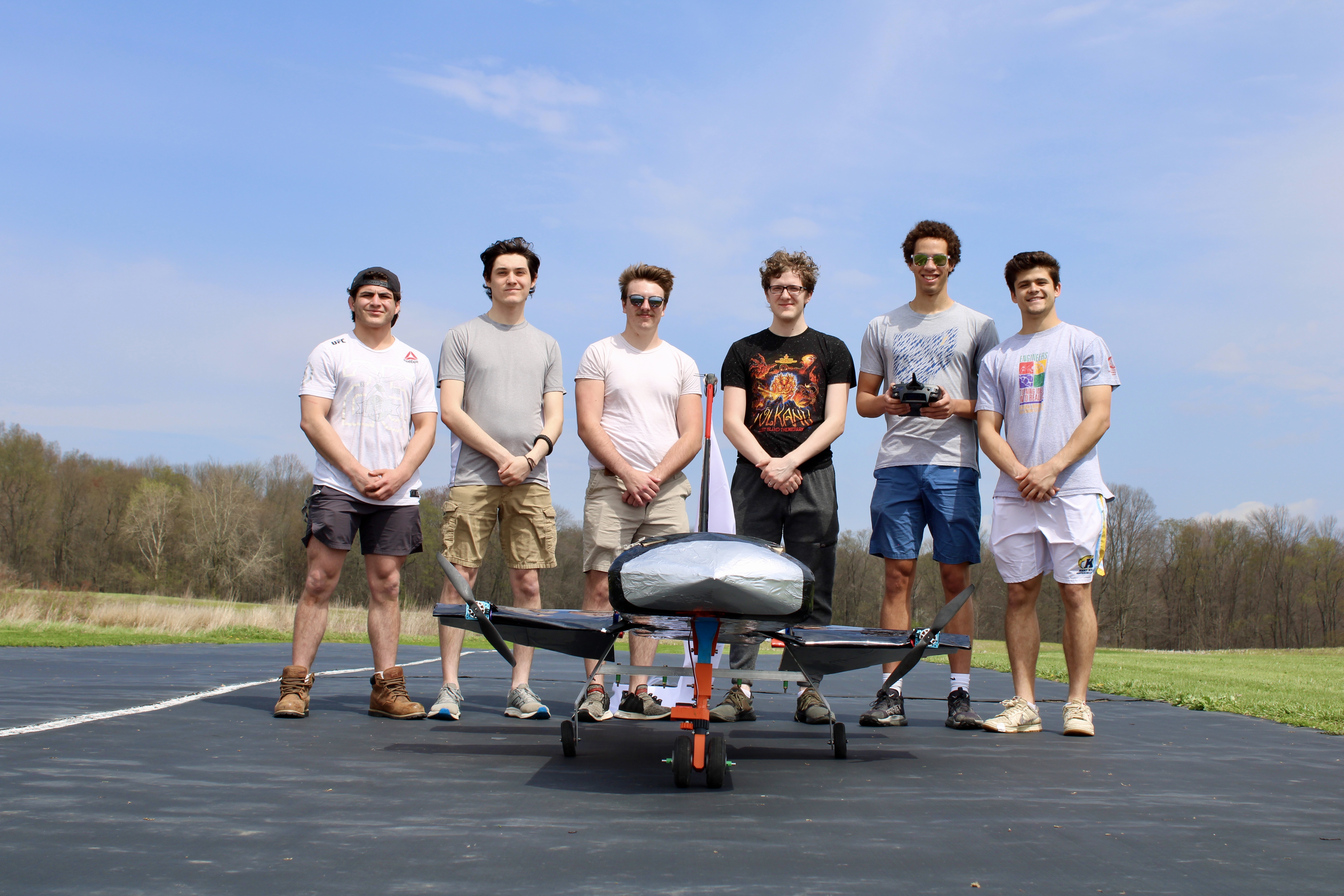
A team of six engineering students set out to design, build and fly a large-scale cargo remote-controlled aircraft for the American Institute of Aeronautics and Astronautics Design/Build/Fly competition. The result was a 10-foot-long aircraft with a 5-foot wingspan, developed through months of design, testing and iteration.
Building Something Special
“Once the rule sets came out, we collectively brainstormed how we could make this project something special,” said Pablo Castro, the team’s structures lead. “Everyone on the team wanted to do something that hasn’t been done every year and wanted to go beyond.”
The team included six aerospace engineering seniors, each bringing a specific discipline to the project. Ryan Wojtowicz led aerodynamics, Adam Varga handled avionics, Tristan Magel took on payload, Jaden Lepp led controls, Shane Coy managed modeling and manufacturing, and Castro. Over the next seven months, they poured their collective knowledge into a single aircraft.
Making the Cut
Getting into the competition was the first hurdle. Out of 172 applicants, only 98 teams were selected, and the Kent State proposal made the cut. Magel credited the team's boldness for catching the judges' attention.
"We proposed an aircraft that was really pushing the limits in terms of the allowable size and weight," Magel said. "I think the judges were interested in seeing what we could do with it."
Shared Space, Shared Vision
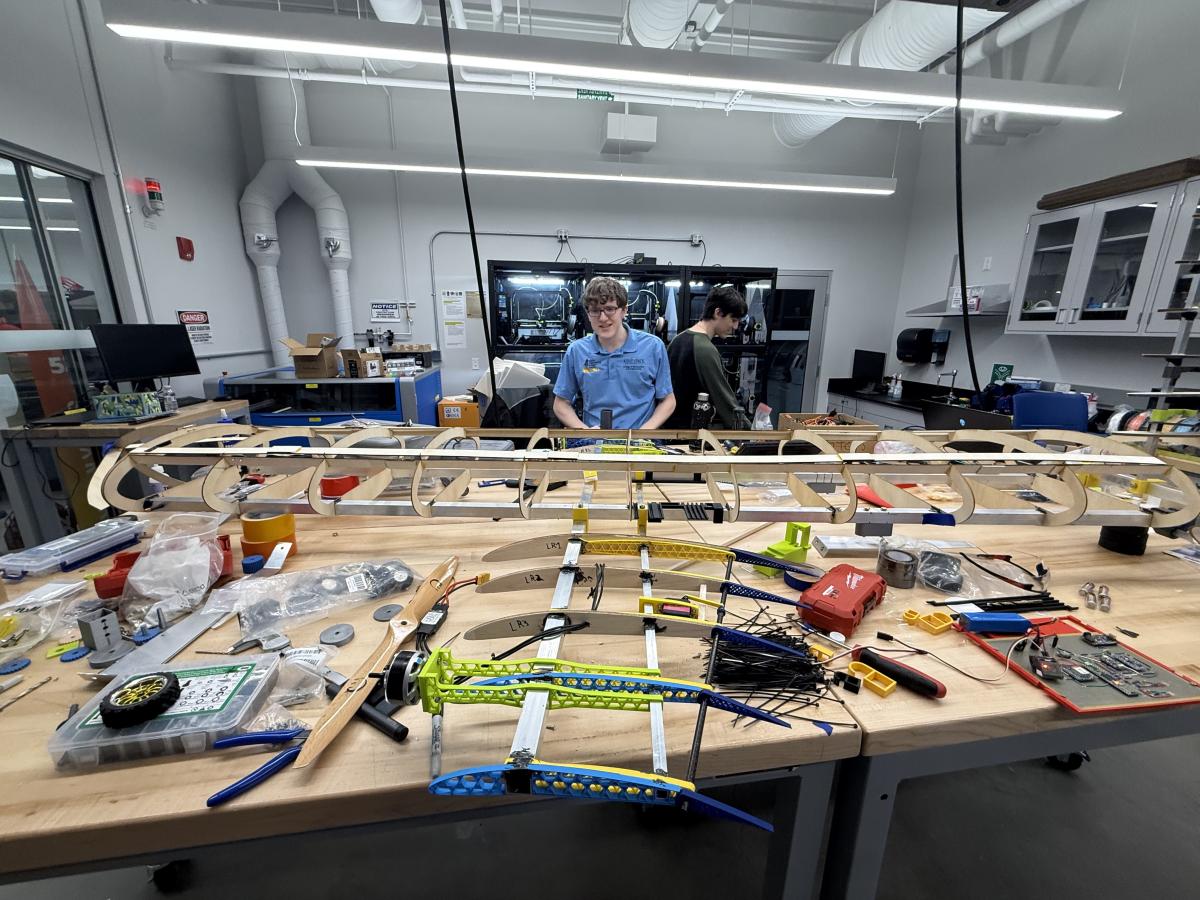
What followed was months of intensive work, most of it done side by side in the same lab. All 3D design work lived in a shared CAD workspace, which kept communication constant and ensured all their subsystems were compatible, according to Lepp. The collaborative setup was critical because every design decision in one area rippled into another.
“If there was ever a disagreement, we would have a team meeting and make sure everyone was on the same page,” Castro said. “We all respected each other’s voices and commitment to the project.”
From Blueprint to Runway
The build pushed the team into unfamiliar territory. Composite fabrication, computational fluid dynamics, structural validation, stability analyses and full subsystem integration were all part of the process. Hands-on work defined the experience. Trade studies, MATLAB optimization algorithms, iterative CAD modeling and aerodynamic optimization shaped the final design. A laser cutter in Kent State's Additive Manufacturing Lab proved to be one of their most critical tools.
"Without the laser cutter, we would have had to 3D print those parts which would have added more weight," Coy said.
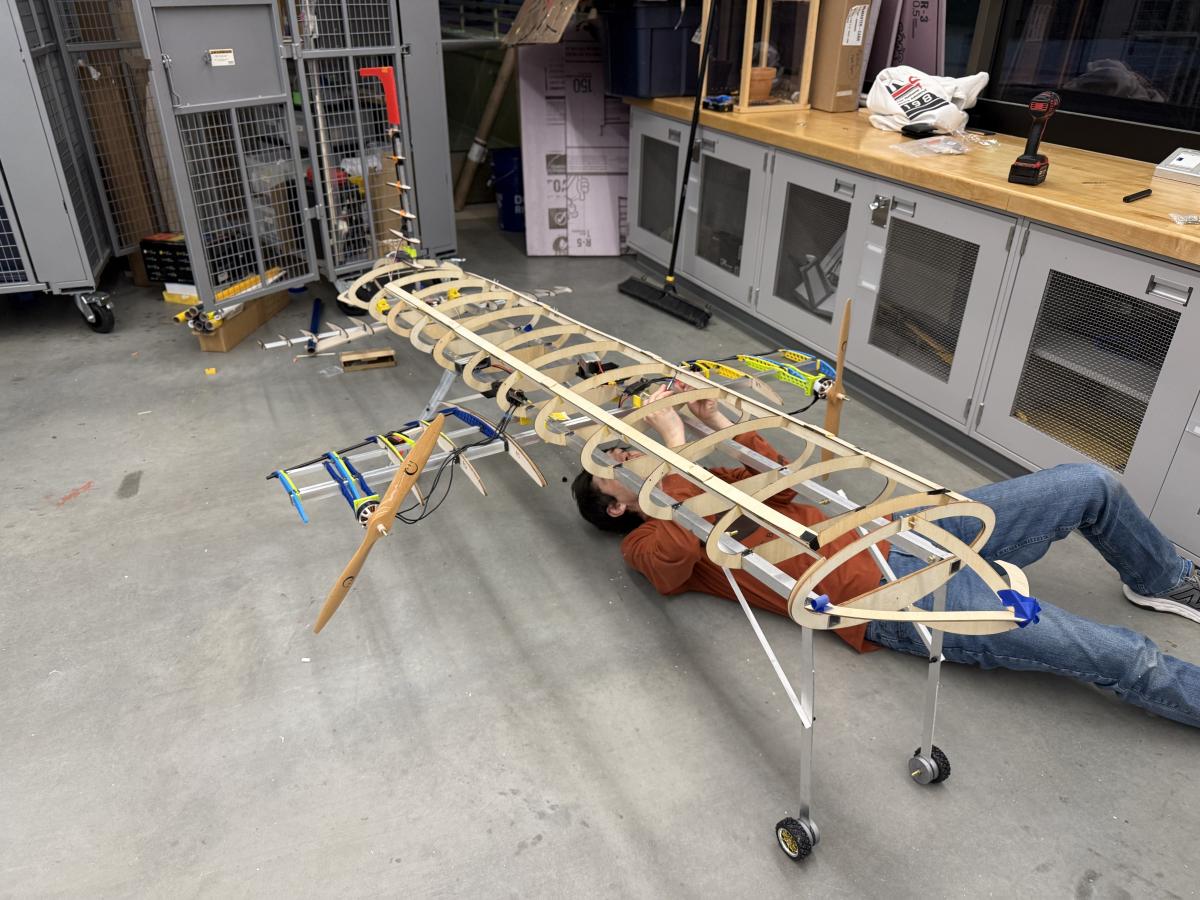
Iterative ground and flight testing followed, each round defining the aircraft’s stability and performance. The failures along the way were part of the process, and the team pushed through them. After months of work, the aircraft achieved a stable test flight of nearly two and a half minutes. For the team, that moment validated their design.
“Success was when we flew at stable flight and I knew our design worked,” Castro said. “The controls, the aerodynamics and the structural integrity all came together.”
Wojtowicz agreed.
“Many people looked at our aircraft and said ‘This thing is supposed to fly? Good luck with that,’” he said. “When we proved our aircraft could have a stable flight, that was success to me.”
The Sunday Before Competition
Just days before traveling to Wichita, Kansas, for competition, the project took a difficult turn. During what was supposed to be a final validation flight, the aircraft experienced a catastrophic electronic failure. A review of the footage revealed a smoking motor -- a mechanical problem that had nothing to do with the team’s months of careful design work.
“It was devastating. Months of work were put into this,” Castro said. “After the failure, I think everyone was down, but we collectively held each other up and said we did not want to hold anything back and we decided with the little time we had we were going to try everything to get it back up and fly.”
No Regrets
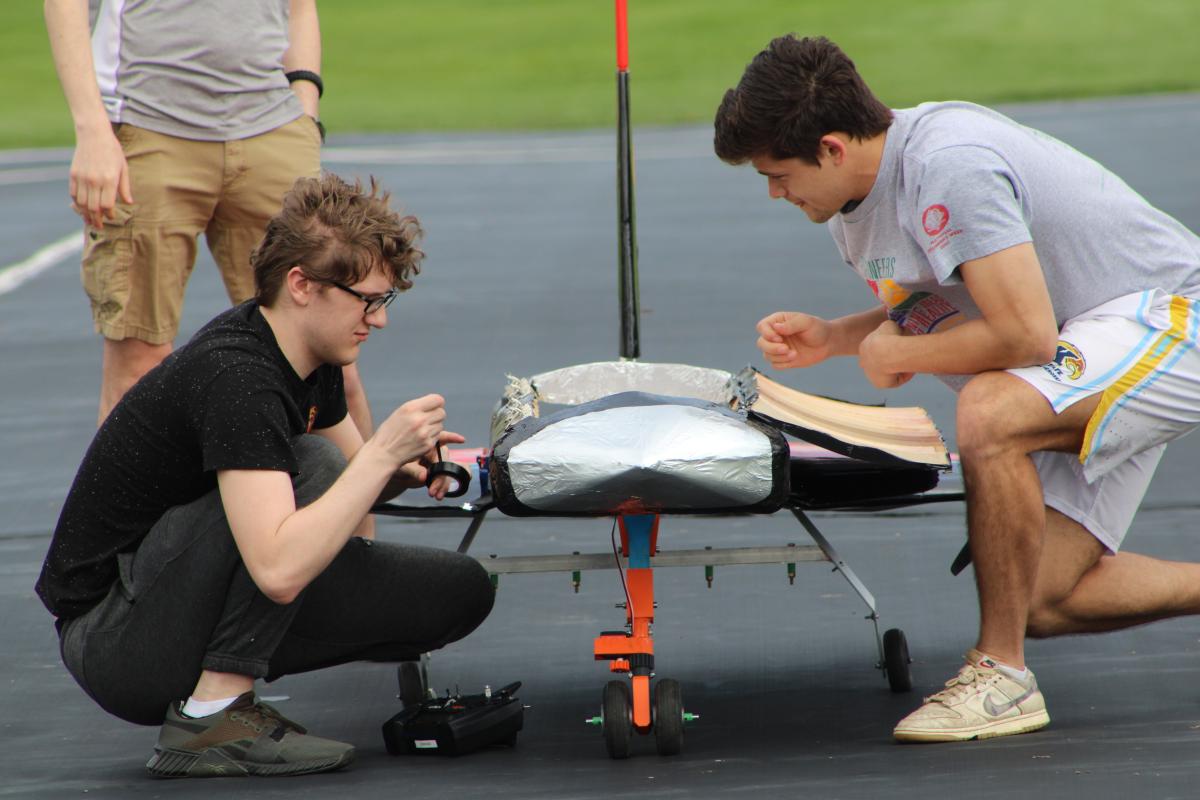
The team had two days to respond and returned to the lab immediately. They worked late into the night to repair the aircraft and did everything they could to rebuild and prepare for one more flight attempt.
“We stayed in the lab until midnight trying to get the plane ready,” Coy said. “There are no regrets in staying and doing everything we could.”
Despite their efforts, time and resource constraints prevented a full repair. The motors and propellers the aircraft was designed to use couldn’t be sourced in time, and the attempt fell short. Competition was off the table.
Beyond the Classroom
Still, the experience left a lasting impression on the team.
“I think the one thing that can’t be taught in the classroom is teamwork and communication,” Varga said. “Avionics impacts every subsystem. This taught me how to think in terms of the whole aircraft, and not just one area of focus.”
For Castro, the project delivered something no course syllabus could have promised.
“The success came from the knowledge and friendships taken away from this journey,” he said.
Ready for What’s Next
As the next generation of Kent State engineers prepares to take on their own challenges, this team has a clear message for them.
“I hope they continue the ambitious drive and set a high goal,” Castro said. “I just hope they keep the bar set high.”
Kent State is producing engineers who carry more than a degree into the workforce. They carry the kind of experience that can only be earned. Although the team didn't walk away with an award, they left with something more lasting: real experience, real decisions made under pressure and the hard-earned knowledge of what it means to keep going after failure. In a global workforce that demands exactly that kind of resilience, six Kent State seniors proved they are ready.
From the first design meeting to the final night in the lab, the team documented every step of the journey. Watch their story below.