For 50 years, state, federal and local agencies have been scooping up water samples from rivers and streams across the country and measuring what's in them – a practice that dates back to the early days of the Clean Water Act. That massive, largely untapped archive is now the foundation of a new project led by David Costello, Ph.D., a professor in Kent State University's Department of Biological Sciences.
Costello is the principal investigator on "AI-Driven Probabilistic Source Mapping for Critical Minerals at Continental Scale," a nine-month Phase I project funded through the U.S. Department of Energy's Genesis Mission initiative. The goal: build an artificial intelligence framework that can turn that sprawling water-chemistry record into a nationwide screening tool for copper, cobalt, manganese and other minerals critical to batteries, solar panels and advanced manufacturing – all resources the United States currently imports at scale.
The Genesis Mission is a historic national initiative led by the U.S. Department of Energy, which is building the world's most powerful integrated science discovery platform. By uniting government, industry, academia and philanthropy, it is accelerating breakthroughs in energy, scientific discovery and national security through a new platform that combines AI, supercomputing, quantum systems and advanced scientific instruments.
"We actually already have millions of records of trace elements in surface water, and that can be a signal of where we could find these materials on the landscape," Costello said.
Costello leads a Kent State team that includes a postdoctoral researcher and a research scientist, alongside Dustin Kincaid, Ph.D., of the U.S. Geological Survey (USGS) Upper Midwest Water Science Center; Michelle Newcomer, Ph.D., of Lawrence Berkeley National Laboratory; and mathematician Angela Peace, Ph.D., of Virginia Tech. The project builds on a USGS-funded research collaboration Costello has been part of for several years.
A River Remembers
Rain falls on the landscape, percolates through soil and rock, and drains into a stream carrying a chemical signature of everything it passes through. A sample taken at Tannery Park in Kent, Ohio, for instance, reflects the entire Cuyahoga River watershed, stretching upstream to Geauga County.
"You don't have to drive all over Northeast Ohio to figure out what's in the soils," Costello said. "You could just take this one water sample."

Why AI Is the Key
The challenge is scale and noise. The national water-chemistry dataset Costello's team is working with spans hundreds of thousands to millions of samples collected over decades, in different seasons, under different flow conditions and across a tangle of connected river networks.
Streams also aren't passive pipes. Biology, chemistry and hydrology constantly reshape the signal: microbes and plants pull trace elements like iron out of the water, evaporation can concentrate other signals and rainfall triggers geochemical reactions that shift concentrations from hour to hour.
"We cannot ask the streams to fast before we take their sample," Costello said, likening the challenge to a blood panel thrown off by an unfasted patient. "People are going out and sampling at different times of day and during different periods of dryness or wetness. That's something we have to figure out, without being able to control for it."
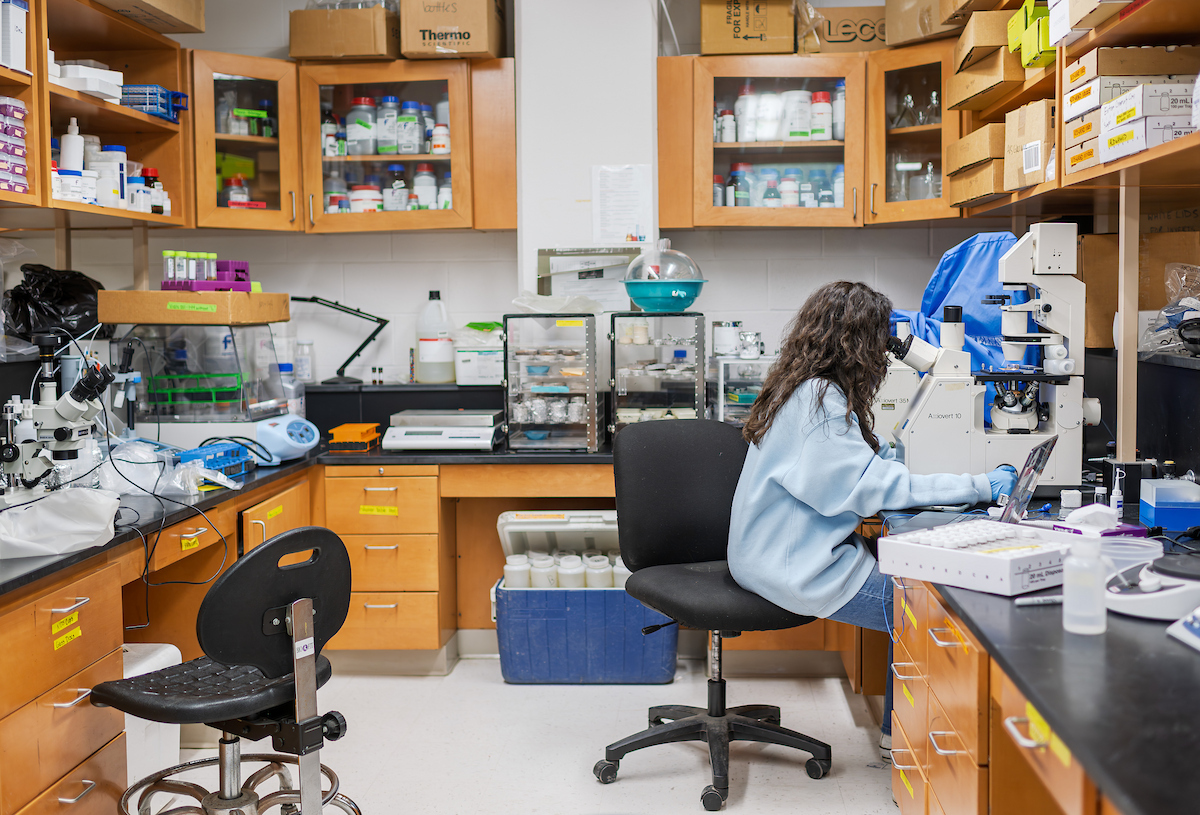
Machine-learning models, Costello said, are well suited to teasing a consistent geologic signal out of that noise. "They discover things that I can't see in these huge data sets because they're just so big and unmanageable. It really is a valuable tool for advancing our science."
What Success Looks Like
Phase I is a proof of concept. Over nine months, the team will focus on three initial elements – copper, cobalt and manganese – to demonstrate that their models can extract a reliable geologic signal from the water-chemistry record. Deliverables include a harmonized national dataset, continental-scale prediction layers, models of how biology modifies the signal and an initial prospectivity tool, all designed to plug into the Department of Energy's data platforms. The project also requires the team to identify a potential industry partner within the nine months, a step Costello said is still ahead of them.
The goal of the Phase I awards is to identify promising pathways toward transformative scientific capabilities and establish a foundation for future investment and scale. Project teams will design and demonstrate research workflows that integrate AI with scientific investigation while rigorously evaluating whether those approaches can accelerate discovery, improve predictive capabilities, enhance experimentation or generate new scientific insights.
If Phase I succeeds, it would position the team to pursue a larger, multiyear follow-on award to expand the approach to more elements and a wider scope. The Department of Energy's public request for applications states that Phase I awards may be made for up to $750,000; the agency has not yet published final award figures. The Department of Energy formally announced the Genesis Mission awards at an event in Washington, D.C., on July 22.
A Question Costello Has Already Answered Once
The Genesis Mission project asks what a stream's chemistry can tell us about what's buried in the landscape upstream. It's not the first time Costello has read a river's chemical signature for hidden information — it's just the first time he's working at the scale of the entire United States. Months before the Genesis Mission award, Costello and a team of collaborators published a study asking a related but inverted question: not what a stream's chemistry reveals about the ground it drains, but what it reveals about the stream itself, and what that means for one of Ohio's most visible water crises.
On a warm summer afternoon, wading into Breakneck Creek near the Kent Campus, one might not notice anything unusual about the water running clear over smooth rocks. But Costello sees something that most scientists have spent decades overlooking: a stream that is quietly iron-deficient.
Costello's research, published March 8 in the journal Ecology Letters, challenges a foundational assumption in stream ecology — that algae and other primary producers at the base of aquatic food webs are almost exclusively limited by nitrogen and phosphorus. His team's findings suggest that trace metals, particularly iron and zinc, play a far more significant and previously underappreciated role.
"We've known for decades that iron can limit plant growth in the ocean, but the prevailing assumption has always been that freshwater streams have plenty of metals," Costello said. "This study shows that assumption is wrong, and that has real implications for how we think about managing our streams and rivers."
Testing the Assumption Across 41 Streams
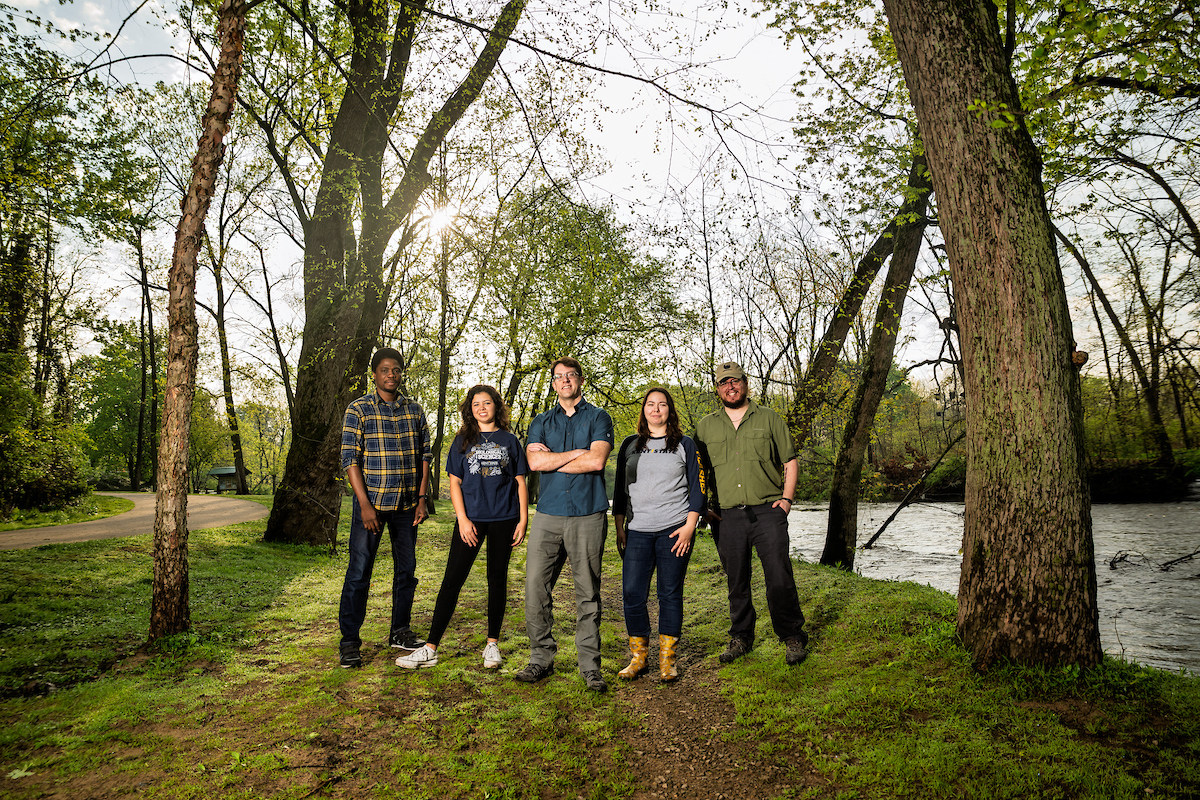
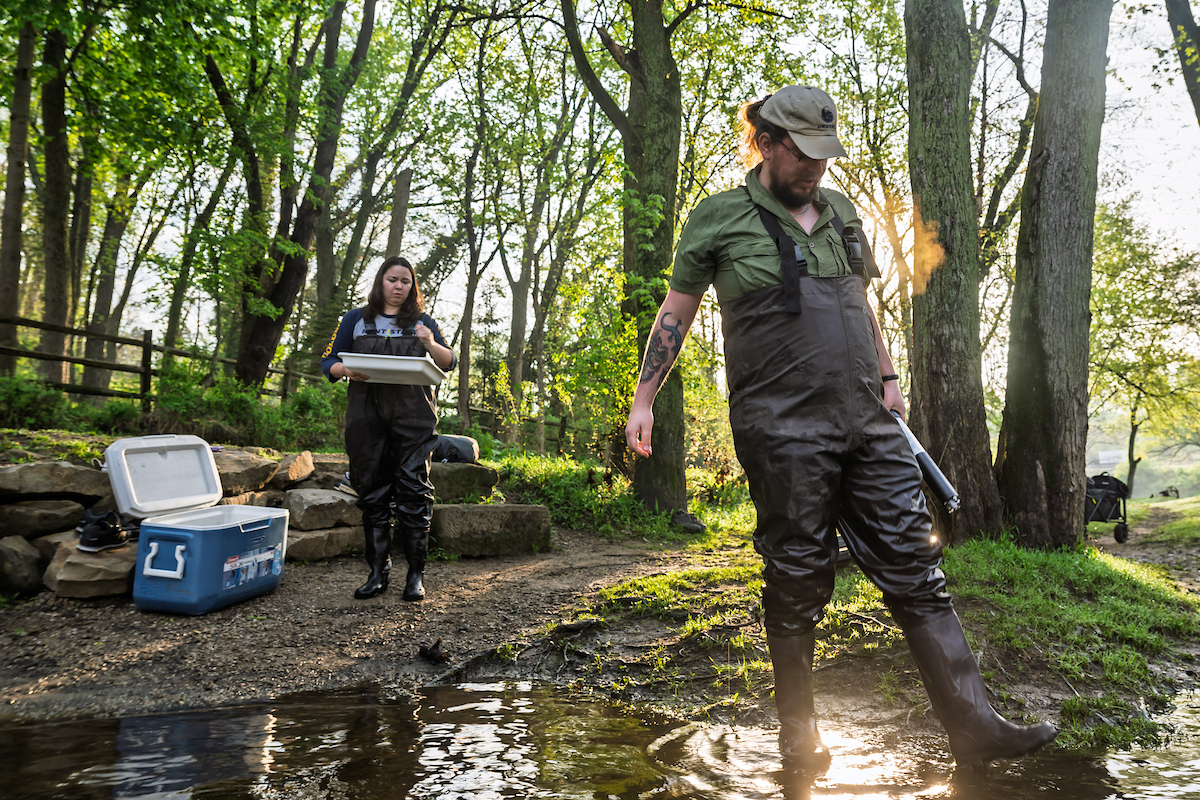
Working with a team of 10 co-authors from Kent State, Oakland University, the University of Georgia and other institutions, Costello conducted nutrient and metal enrichment experiments in 41 streams spanning about 1,000 miles across the eastern United States. A National Science Foundation grant supported the research.
The study sites included streams well known to Northeast Ohio residents: Fish Creek and Breakneck Creek in Kent, Tinkers Creek, the Rocky River, the Chagrin River and streams at the Holden Arboretum in Lake County. Additional sites extended into both the Upper and Lower peninsulas of Michigan and as far south as South Carolina.
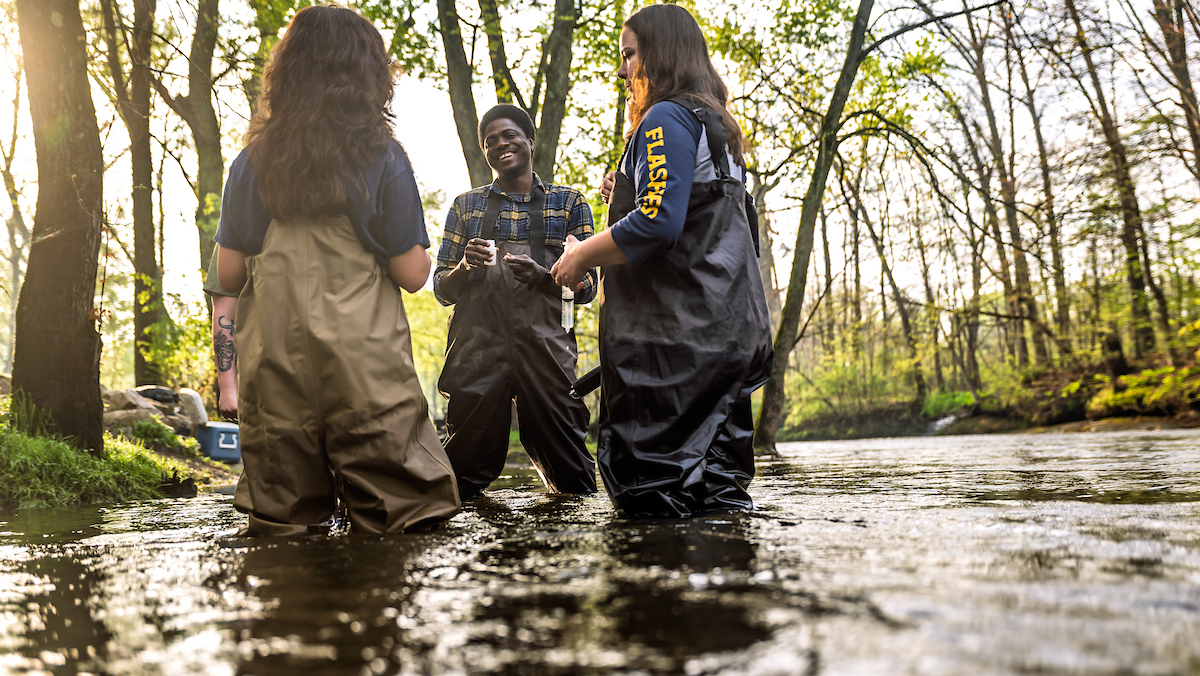
In each stream, the research team deployed small cups that released controlled amounts of nitrogen, phosphorus, iron, zinc and other metals, then measured how algae and microbial communities responded. If more algae grew on the fertilization cups, that was a sign that the surrounding stream water was not naturally supplying enough of the nutrients to sustain rapid algae growth, a signal that the nutrients were limiting the algae. The fieldwork unfolded across two summers, 2021 and 2022, with each in-stream experiment running two to four weeks.
The effort involved three Kent State graduate students — Jordyn Stoll, Renn Schipper and Olufemi Akinnifesi — as well as postbaccalaureate researcher Paisley Kostick, at least eight Kent State undergraduates and two undergraduate summer interns through the National Science Foundation Research Experiences for Undergraduates program.
What They Found: Iron Was a Major Limiter
The results were striking. Iron limitation was widespread and consistent, affecting 50% of the streams studied. Zinc limitation was documented in 33% of streams — the first time zinc limitation has been demonstrated in natural streams.
Metals were rarely acting alone, revealing a more complex nutritional picture than the field had previously recognized. Different organisms also responded differently: diatoms proved more responsive to zinc, while cyanobacteria thrived with nitrogen and phosphorus enrichment.
"Nutrient limitation — whether by metals or major nutrients like nitrogen and phosphorus — is actually the normal, healthy status of a stream," Costello explained. "The opposite is very obvious. When a stream has plenty of nitrogen, phosphorus and trace metals, the rocks will be covered in slimy green algae."
A New Management Lever for Lake Erie?
For Ohioans familiar with harmful algal blooms in Lake Erie, the implications of Costello's research extend well beyond the science pages. Excessive nutrient runoff — particularly nitrogen and phosphorus from agricultural and urban sources — has long driven eutrophication in Lake Erie and its tributary rivers. Costello's findings suggest the picture may be more nuanced.
"Eutrophication and harmful algal blooms are a big concern in Lake Erie, but these kinds of problems can also happen in rivers and streams," Costello said. "Algae clean up nutrient pollution from water and provide a food source for fish and other stream animals, but algae in rivers can't clean up excessive pollution, and that leads to the harmful algal blooms that we see downstream in Lake Erie."
Lake Erie serves as a drinking water source for millions and draws significant recreational activity, making harmful algal bloom management a public health concern as much as an environmental one.
Costello's team also developed predictive models showing that iron and zinc limitation can be forecast from broader environmental variables, a finding that could eventually help land managers and regulators better target their interventions.
"Controlling iron and zinc might be an additional management lever we could pull to address harmful algal blooms in rivers and Lake Erie," Costello said. "Nutrient management is a top priority for Ohio rivers that feed into Lake Erie. Knowing that metals like iron and zinc might also be critical nutrients for algae, it opens up new possible management actions. There's still a long way to go, but this is a promising direction."
Building on a Growing Body of Work
The iron and zinc study is the latest in a series of high-profile publications from Costello's lab focused on the health of freshwater ecosystems. In 2024, Costello and many of the same collaborators — including co-authors Scott Tiegs, Ph.D., of Oakland University, and Krista Capps, Ph.D., of the University of Georgia — published a landmark study in the journal Science mapping how human activities are accelerating organic matter decomposition in rivers worldwide, with direct implications for global carbon emissions. That study also relied on field data from streams near Kent, including Breakneck Creek.
Taken together — the Science paper, the Ecology Letters study and now the Genesis Mission project — the work reflects a sustained effort to understand freshwater ecosystems in their full complexity, one dataset at a time, from a single cup of fertilizer in Breakneck Creek to 50 years of federal water-chemistry records spanning the continent.
"The work we're doing here in Northeast Ohio is part of a larger effort to understand how human activities are reshaping freshwater ecosystems — and what we can do about it," Costello said.
The iron and zinc study, "Anaemic Streams: Iron and Essential Trace Metals Frequently Limit Primary Producer Biomass," was published in Ecology Letters (Volume 29, Issue 3, 2026).