Walking in downtown Cleveland, Ohio, if you stop and stand at any major intersection and look around, the odds are that multiple buildings within your sightline were designed by Kent State University graduates. From major cultural institutions like the Cleveland Museum of Natural History or the Rock & Roll Hall of Fame to the venerated theatres at Playhouse Square. From major employers like Sherwin-Williams to the Cleveland Clinic.
Kent State’s College of Architecture and Environmental Design has been training top architects for decades, and the evidence is displayed across Cleveland, as well as regionally, nationally and even internationally. At four major firms in Cleveland – DLR Group, Perspectus, K2M Design and Vocon – you’ll find Kent State graduates at every level, from principals leading the organizations down to the interns, and the impact they’ve made on the city is evident.
“One of the reasons I enjoy getting up in the morning is because of our firm’s legacy in Cleveland,” said Chris Loeser, MARC ’07, BS ’07, principal at DLR Group. “We’ve had a hand in shaping the built environment of the region across multiple generations, and it’s a privilege continuing that work today. I love being able to walk down a street and point to buildings from different eras of our firm.”
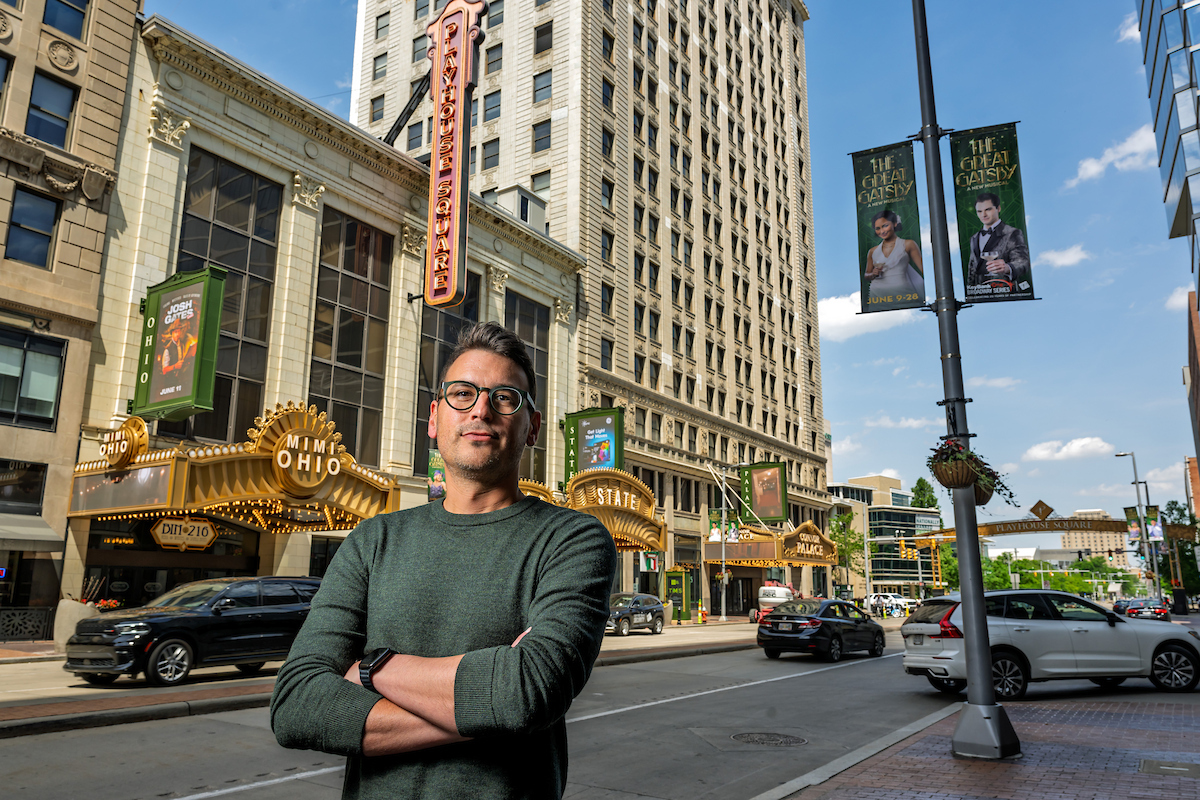
“Kent Staters are leading the majority of the top design firms in Cleveland, both architecturally and interior design,” said Scott Maloney, BS ’97, BARC ’97, principal at K2M Design. “When you look across Cleveland right now, the scale of investment and transformation is remarkable. We’re seeing major new housing and mixed-use development reshaping the riverfront, a significant reimagining of the airport and its surrounding infrastructure, and the new football stadium and entertainment district. At the same time, the future of the existing lakefront stadium site could unlock roughly 50 acres for an entirely new chapter of lakefront development. Taken together, these aren’t isolated projects. They represent a generational opportunity to rethink how Cleveland connects its neighborhoods, its waterfronts, its infrastructure and its major civic assets. Kent Staters are going to be a part of that process, and they’re really the ones that are shaping the economy of what we’re doing here today.”
Building an Architect
There are themes that begin to emerge when looking at the alumni and students from the College of Architecture and Environmental Design: the ability to balance theory and practice, a global perspective and stories of late-night sessions doing studio work all coalesces into the unique combination of grit, tenacity and the ability to think flexibly and adapt to changing times that students possess.
“Our goal is to prepare graduates to lead in a rapidly changing world. And we all know that the world is changing at an increasing pace,” said Mark Mistur, dean of Kent State’s College of Architecture and Environmental Design. “Our goal is to make sure that our students are not just ready for their first job, but they’re ready to be leaders and to step forward in years 10 to 15.”
While Mistur stressed that the first job is critical and something that students are prepared for, he wants to ensure that graduates will have the skills necessary to land that first job and successfully and efficiently work their way up to leadership positions.
“What’s really important about preparing students to lead is to enable them to think about the future, to be innovative and to know that the world is not static. It’s going to change,” Mistur said. “And as the world is changing, our profession has to change. The climate is changing, technologies are changing and social circumstances are changing. And the built environment to house those things and the way that we design those things with new technologies are rapidly changing.”
But regardless of how technologies or systems change, alumni agree that Kent State graduates are always prepared for whatever awaits them in the work force.
“As an employer, we do still see Kent State grads having that sort of quality, a readiness to work. I think it comes from the rigor of the program, but also the well-balanced nature of the program that makes you ready to take on the variety of tasks the job requires,” said Josh Haney, BARC ’04, BS ’03, principal at DLR Group.
Matt Heisey, BA ’94, principal at Vocon, agrees, and his firm has the number of Kent State graduates in its ranks to back it up. More than 40% of the staff at Vocon’s Cleveland office are Kent State graduates.
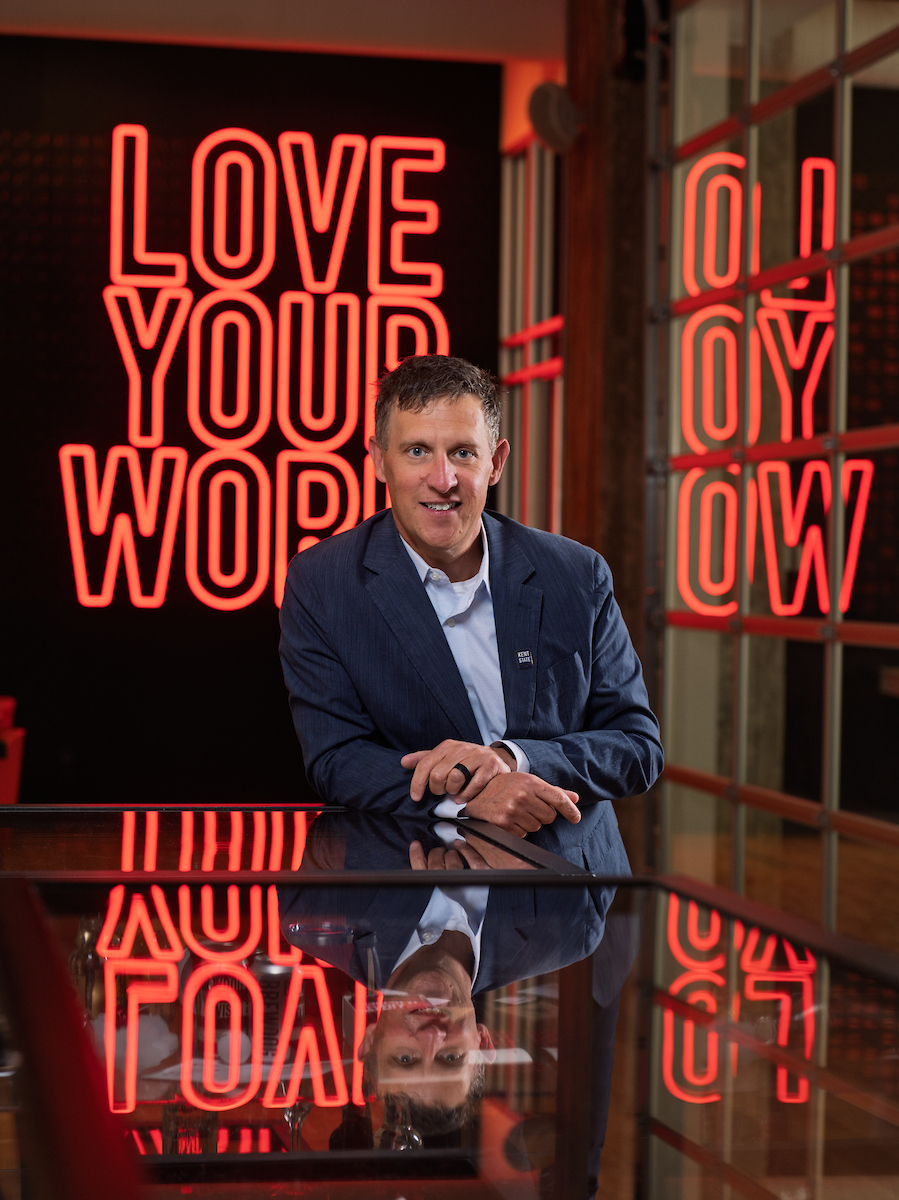
“I’ve sat on the College of Architecture’s Advisory Board for quite some time,” Heisey said. “It always makes me the proudest to hear that Kent State graduates are ready to immediately contribute. We can plug them right into practice. That hardworking, gritty resourcefulness, knowing your craft, knowing your profession and knowing how to operate within a team, because this is a team sport.”
Still Glowing
At 4 a.m., when the rest of Kent State’s campus goes dark, one building doesn’t. Sarah Sparks, BA ’22, remembers walking out of The John Elliot Center for Architecture and Environmental Design in the small hours of her first year of college and turning back to look at it — lit windows, hunched shapes at drafting tables, the whole structure glowing on an otherwise silent campus.
“Some of my favorite memories at Kent were kind of those late nights in the College of Architecture surrounded by a ton of friends and other students all really collaborating and just having fun while they’re doing this work,” Sparks said.
She chose interior design for the same reason she chose Kent State: It let her hold two things at once, creative freedom and real structure. A senior-year thesis on an environmental learning center let her chase a growing interest in sustainable design. A collaborative pop-up exhibit with fashion students and a magazine project with graphic designers taught her to speak the languages of other disciplines fluently enough to use them.
One faculty member, Tina Patel, kept talking about a Cleveland firm called Vocon, and Sparks found herself drawn there after graduation. Now a Designer II, she recently helped design an environmental learning center for the Laurel School, a project that circles back, almost exactly, to the one she sketched on paper years earlier as a student.
Scott Maloney, K2M DesignKent State prepares the most well-rounded young professionals we have in our organization.
For current students, the school actively prepares them with practical skills that they will need for their first job and hosts a career fair that boasts more than 70 firms. Students also interact daily with a wide range of faculty that includes practitioners as well as with alumni who serve on juries for their studio work and become speakers at events.
“One of the great things about Kent State is that they bring in a lot of national or internationally recognized architects,” said Vlad Novakovic, MS ’97, BS ’97, BARC ’97, principal at Perspectus. His firm’s donation allows for the Perspectus Lecture, which brings in internationally known architects to speak with students.
“Prior to the lecture, there is a session where they only invite the students,” Novakovic said. “It’s the students talking one-on-one and having a firsthand conversation with an internationally known architect, an architect whose work is published in magazines.”
Alumni can also come back and participate in student presentations.
“As a juror for the Integrated Design Studio, I had the opportunity to review a broad range of student work and design thinking,” said Mark Morris, BARC ’03, BS ’02, lead designer and principal at DLR Group. “It offered a firsthand look at how Kent State students approach their work, develop ideas and prepare for professional practice.”
He said that when his company is looking for interns or entry-level staff, he feels lucky to have the opportunity to hire the students that he saw as part of the jury.
“It is especially rewarding to review student portfolios, meet with students and interview prospective candidates,” Morris said. “We are fortunate that many of these exceptionally talented individuals choose to begin their careers with our firm.”
This Is Not HGTV
Long before Amber Yurick, BA ’25, knew the word “designer,” she was building floor plans out of a Barbie dollhouse — rearranging furniture and obsessing over how a space fit together. That instinct for organizing a room never left her; it just found a name. She remembers being handed paper and told to build a model during her first year at Kent State and thinking, “This is not HGTV.” That was the point. Kent State taught her there was a discipline underneath the instinct, with courses in design theory and professional practice that pushed her to justify every decision, not just make it.
The culture reinforced it. Architecture and interior design students shared the same building, with the same projects passing back and forth, so collaboration wasn’t an elective — it was just how the place worked. That carried into Florence, Italy, where she roomed with an architecture major, and the two spent evenings trading feedback across disciplines, each borrowing the other’s eye.
By the time she graduated, she says the readiness wasn’t abstract anymore — it showed up as confidence. Just months into her job at K2M, she’d already sat in on client visits, site tours and projects spanning hospitality to corrections, never boxed into one task. She credits Kent State for that: a program that kept insisting she was capable of more, until she believed it enough to prove it.
Alumni also teach as adjunct professors and get more interaction with students. Sal Rini, BS ’90, managing principal at Perspectus, mentioned that several staff at the firm have worked as professors.
“They come down, and they teach design studios,” he said. “We also do a number of critiques for senior projects, and we support the lecture series.”
This level of participation with the school leads to jobs down the road. “More than half of our professional staff are Kent grads,” Rini said.
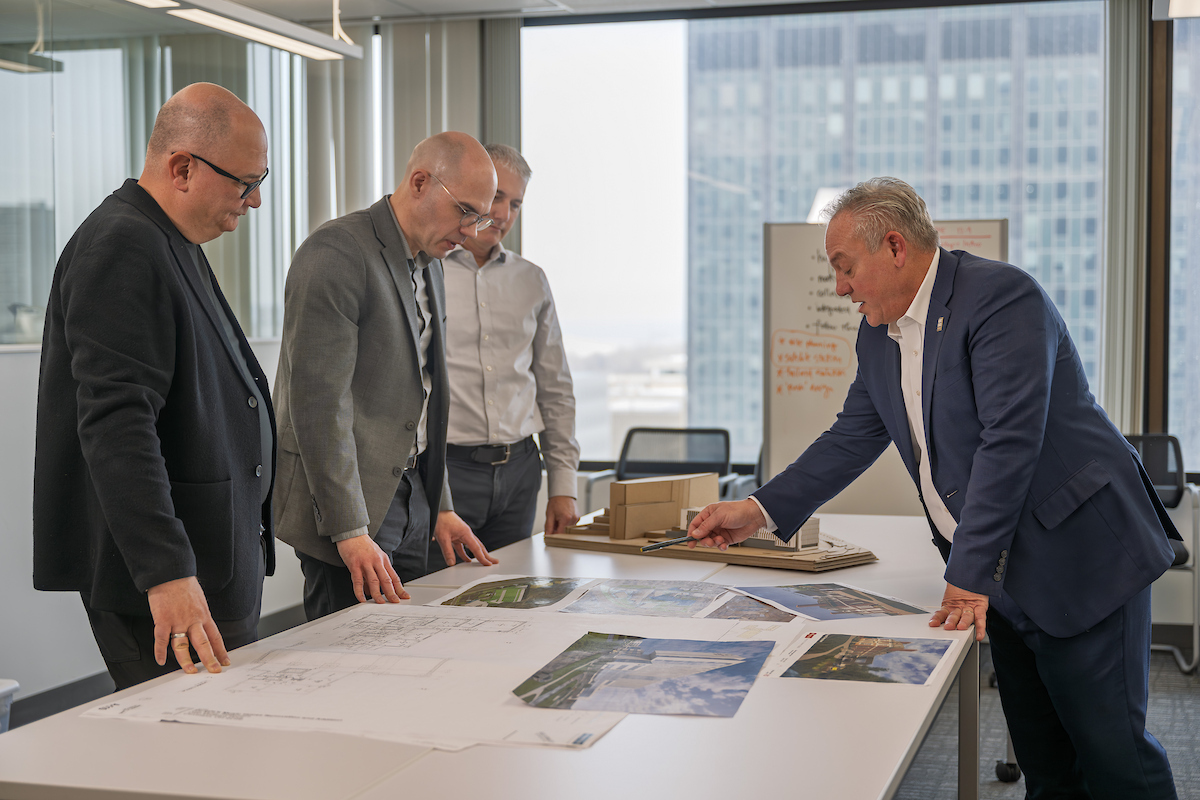
“I think part of the job of a dean or a director of an architecture program is curating the mix, the ecology of faculty,” Mistur explained. “The balance of those who have Ph.D.s and are producing research and knowledge and others who have feet on the ground and are in practice and have driven here from a morning of working on the drawing boards to produce a project for a client, that’s critical. They’re different, and they play different roles.”
He noted the importance of people who are in the field using the latest technology and who are actively completing projects for clients as sources of knowledge for students. But research is still integral to consider the field as it evolves.
“It’s also important for students to be exposed to those who are innovative and doing research on new technologies and techniques or things that are going to be applied tomorrow that may not come to the market for years,” Mistur said. “They’re going to be dealing in larger ways with the application of new materials, dealing with climate change and strategies for dealing with sea rise. They’re going to be dealing with lots of things that a person in practice can’t bill a client for, but they’re anxious to use the knowledge we’re producing five years from now when it is on the market.”
This balance is something that appeals to students and alumni as well.
“I think the original reason I selected Kent was that balance between the creative design curriculum as well as the technical aspect,” Novakovic said. “I felt it was a nice balance between the two, and I wasn’t focusing more on the science of building versus the design theory. It really was a nice complimentary balance to that.”
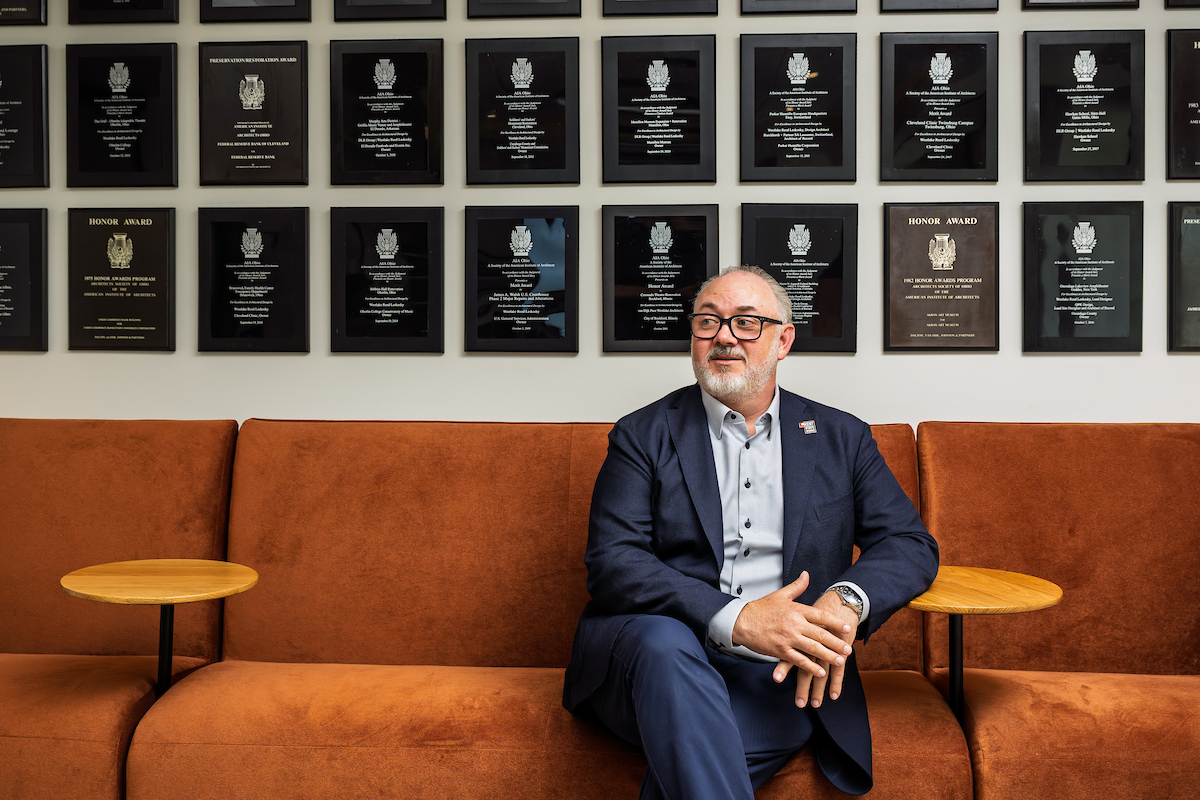
“From an education standpoint, it’s very balanced,” said Matt Janiak, BS ’00, senior principal at DLR Group. “I was just talking with some of our team earlier today that balance is important navigating both the ability to be creative and design but also have the vocabulary to come into the market and work technically ... I have come to trust the university in providing great education to the students so when they start with our firm, they really hit the ground running. They’re ready to jump in, and there’s no translation.”
Grew Up in the Front Yard
Robbie Eberhart, MARC ’22, BS ’20, has a history with Kent State that starts before he can even remember it. He went to preschool at the Child Development Center on campus, sledded the hill in front of Cartwright Hall and rode his bike through streets that would later become his commute to class. When he enrolled as a student, he lived close enough to walk with no residence hall room required and no real distance between his childhood and the rest of his life.
He was part of the first class in the college’s new building, where open studios meant a first-year student could overhear a fourth-year critique just by walking upstairs to print something — ideas drifting between floors like weather. Kent State pushed him to borrow from disciplines that weren’t his own: a friend in graphic design taught him to see composition differently, and classmates dating into the fashion program pulled him into conversations about art he’d never have started on his own. One studio, built entirely around virtual reality, humbled him before it became one of his favorites.
The university’s career fair put him in a room with Perspectus, where healthcare design pulled him in — an unfamiliar field he now wants to master start to finish.
These days, he goes back for studio reviews, sitting on the other side of the table from where he once sat, terrified, certain his whole future hinged on 10 minutes.
Matt Heisey, VoconHaving a balance of history, foundational theory, creative courses, technical courses — all of those things have to cook together to be a well-rounded professional coming to work each and every day.
Building Students of the World
There’s no better example of the flexibility of thinking that the school promotes than the education-abroad program in Florence, Italy. More than 70% of Kent State’s architecture students study in Florence, and it often becomes one of their most impactful experiences.
“Travel in architectural education is key,” Mistur said. “It’s key because we don’t just design for ourselves. We’re designing for others, and we can’t really understand ourselves until we get away from ourselves or our culture or the place that we grew up. To leave our comfort zone is to gain an understanding of who we are and who others are.”
Morris agrees. “Before studying abroad, my understanding of the world was largely shaped by the community and experiences I knew firsthand,” he said. Morris credits his time in Florence with widening his perspective and igniting a curiosity about the world.
“I came to appreciate that while people have much in common, culture and background play a powerful role in shaping how we see the world,” Morris explained. “And that was a really eye-opening thing for me.”
Though it is not currently a requirement of the program, Mistur wants as many students as possible to be able to participate in education abroad.
“I’m absolutely committed to raising funds and helping whoever I can help have that kind of study-away experience,” Mistur said. “The Florence program is precious. We founded it in 1972 and have had an extraordinary program for years.”
Many architecture and interior design students participate in the Florence program, and Mistur stresses that it’s a place where students go and find themselves.
“I would say that the Italy program was probably the biggest turning point, and for me it was when I became an adult,” Maloney said. “That Italy exploration was absolutely transformative for me. It really kind of set me up even to who I am today, how I travel today, the things that I enjoy, explore. But it really gave me that foundation, and the rest of my profession thereafter just got stronger and stronger because of it.”

Many alumni said that their time in Florence helped them to gain a level of independence they hadn’t reached quite yet.
“My top experiences come from my experience in Florence, and not only from an architectural standpoint, but the ability to just grow as a person,” Rini said. “You’re seeing all the great architecture in our history, but you’re also able to live on your own for a while. You’re accountable for yourself for a couple months, which I think was a big deal for me
Mistur feels it is critical to experience that kind of travel and for students to step outside of their comfort zone.
“It’s a place where one decides to own their own education,” Mistur said. “When they come back, we notice a difference that they’re not just participating in classes, but they own their education and their classes, and they’re deciding what they want to do, what they want to pursue and how they’re going to pursue it because they’ve just come back from a semester, which wasn’t just about classes and learning. It was about enjoying life and the pursuit of something that they have a passion for.”
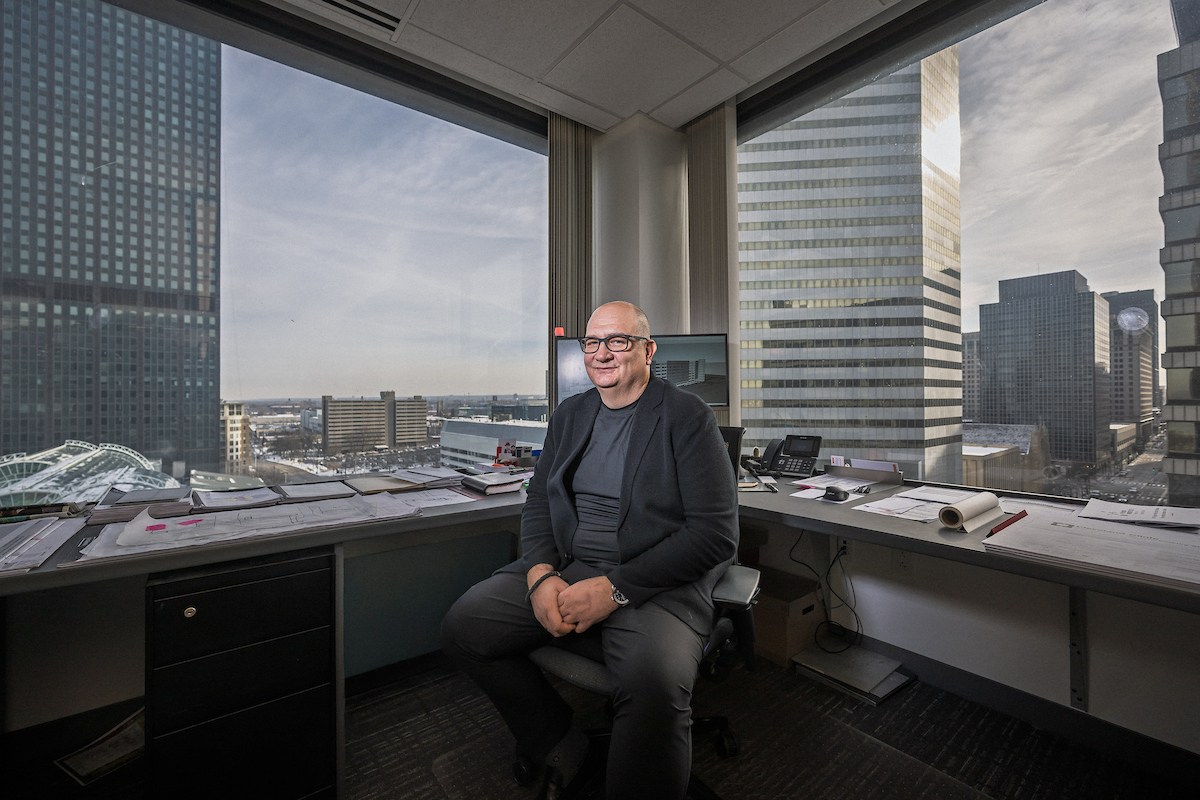
Novakovic enjoyed the experience so much, he decided to do it twice. He traveled to Florence as part of his undergraduate program, and after graduation decided to pursue the two-year master’s program within the school. He was excited about the ability to teach during his graduate program, but also for the opportunity to go back to Florence.
“I was very privileged. They say it was a once-in-a-lifetime opportunity that I enjoyed so much, I did it twice,” Novakovic joked.
He said pursuing the master’s degree was one of the best decisions he made in his career, and his second trip to Florence focused more on urban design, widening from his first trip’s view, which was more strictly on architecture. He sees the experience as invaluable to a growing architect.
“Architecture is very regional from some aspects, but it’s also international and intercultural,” Novakovic explained. “It’s understanding how different cultures work and how different cultures react and understand different ideas on community and gathering and public experience.”
17 Days
When Endiah Johnson, BS ’25, sat down for this interview, she’d been a summer intern at DLR Group for 17 days — long enough to feel the pull of the place, but not long enough to know everyone’s name.
At Kent State, her design philosophy got a name: spatial justice, the belief that who a space serves matters as much as how it looks. That belief took her to two continents. In Florence, Italy, in 2023, she and a tight-knit studio group explored a city she’s already planning to revisit with friends. In New Delhi, India, on a self-designed Kent State travel fellowship, she spent eight months proposing and researching before studying sidewalk culture firsthand, work she still pulls from when designing for communities different from her own.
Back in Cleveland, she brought that same instinct home through the Cleveland Urban Design Collaborative’s Making Our Own Space program, working with kids at a local recreation center to turn their own ideas — light, projection, motion — into an interactive installation and a 3D-printed fixture they helped design themselves.
She isn’t sure yet where she’ll land, but she hopes one day to build the kind of program for kids that she never had growing up in Philadelphia, Pennsylvania.
Building for a Society
The impact that the built environment can have on a community is not lost on these alumni. Taking the lessons learned from how community is built in a different culture like Italy to considering the social impact of a new building in their local projects is something that becomes honed over the course of their careers.
Many stressed that experience and time helped them to bring this perspective to the work, but that it’s become one of their favorite parts about their career.
“When I was younger, my focus was primarily on the practical and tactile elements of design,” Morris said. “As I progressed in the profession, I learned that architecture is fundamentally about people. A solid understanding of how buildings are designed and constructed provides the foundation for a larger question: How can we use design to improve lives and strengthen society?”
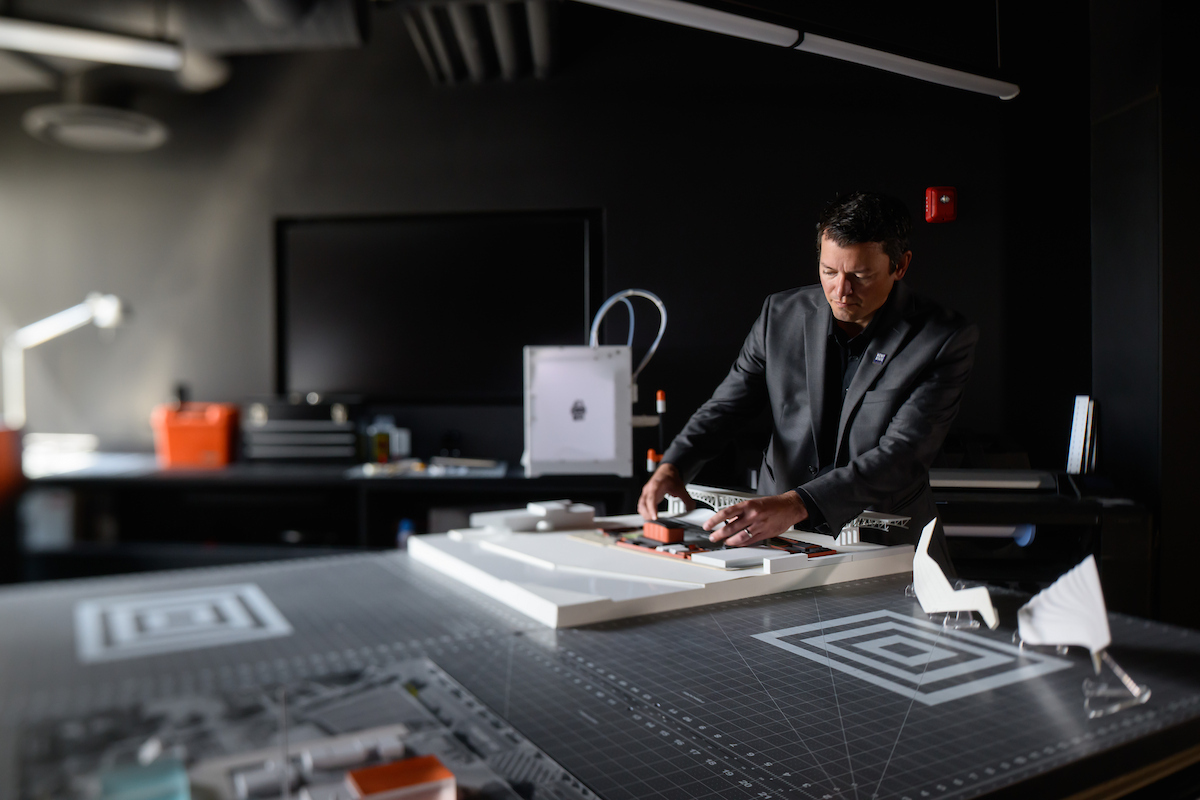
Mistur stressed the importance of considering wellness within design.
“We can make spaces that are oppressive. We can make spaces that create wonder. We can make spaces that make you feel good. We can make spaces that allow you to feel connected,” Mistur explained. “It’s very important that we understand behaviorally how people respond to spaces and how mentally we respond to spaces.”
From how people interact with a cultural space to how people feel in a hospital setting, the built environment can make a big impact on how a person feels.
“There’s lots of data that supports the idea that how you design a patient room can improve patient outcomes or how you design a classroom can affect student performance, which is all valid,” Haney said. “But I think there’s also an even bigger idea at the scale of communities and cultural institutions that asks who is invited to be here and how do you create a sense of welcoming and belonging. I think it can be seen both in the data and outcomes, but also just in the broader sense of who are we signaling, ‘Please come in and use this space’ or ‘Use this building.’”
Chairs Up the Hill
The studio for Haley DeRose, MS ’21, MARC ’21, BS ’19, wasn’t even in the new architecture building yet during her first year at Kent State. It was in Taylor Hall, and students hauled their own chairs up the hill on the first day of class, a small migration that’s become one of her favorite memories of Kent State. By sophomore year, she’d moved into the building she’d chosen the school partly for: a design that put every studio, first year through senior, in the same collaborative space.
Her thesis pushed that same instinct further. Working with tensile structures made from Glass Fiber Reinforced Polymer (GFRP) rods and a hand-knit textile of coconut coir, she built lightweight, reusable pavilions designed to grow microgreens in food deserts — a project born in the basement of the architecture building and eventually presented at a conference in Barcelona, Spain.
Now at DLR Group, she’s applied that same rigor to healthcare and workplace design, running a life-cycle carbon analysis that helped push the Cleveland Museum of Natural History to Leadership in Energy and Environmental Design (LEED) Platinum certification and currently working on a 13-story outpatient tower in Manhattan. What stays with her most, she says, is talking to the nurses who’ll use the spaces she designs and watching them light up when finally asked what they actually need.
Building Locally
This dedication to the idea of impact that the built environment can make is something the school continues to focus on in its own backyard. Beyond the alumni who work at the firms changing the skyline and making brand new buildings across Cleveland, students and Kent State staff and faculty are working to create better spaces through the university’s Cleveland Urban Design Collaborative, an innovative urban design practice housed within the College of Architecture and Environmental Design but located at Playhouse Square in downtown Cleveland.
“It’s an exceptional collaborative of folks who look at and try to contribute and give back to our Cleveland community,” Mistur said.
The Cleveland Urban Design Collaborative combines design assistance, applied research, education and advocacy to impact urban design decisions and land use policy in Cleveland, Northeast Ohio and beyond. Its mission is to create livable and sustainable communities, enhance the public realm, protect natural and cultural resources and stimulate economic prosperity.
“We’re not just interested in those shovel-ready projects, but those shovel-worthy projects that can contribute to the well-being of our communities,” Mistur explained. “And that’s very important to us, and that’s the mission of the Cleveland Urban Design Collaborative. That and as an outreach program to our youth, like our Making Our Own Space program, that goes to middle and high school students to help them understand that they can have agency in their own neighborhood. They can have agency to understand what their environment could and should be like and to understand at that young age that they need not be passive. They can be active participants in society and the built environment that in turn is going to shape them, to shape the environment that will shape them.”
Students interact with the Cleveland Urban Design Collaborative through the Urban Planning and Landscape Design master’s programs, but also with programs that partner with cities and towns in the Midwest and Great Lakes region or internationally through different programs with the collaborative. This gives students more practical experience and the ability to think through real projects and the impact on city design.
“I had a great experience at the CUDC,” Loeser said. “Having an urban design lens applied to architecture helped me understand how a building can fit into the larger urban context; that it’s not about the singular structure, but how it interacts with and contributes to the surrounding environment.”
The impact that their work makes on the community around them is integral to the education that they receive at Kent State, and something they want the next generation to consider.
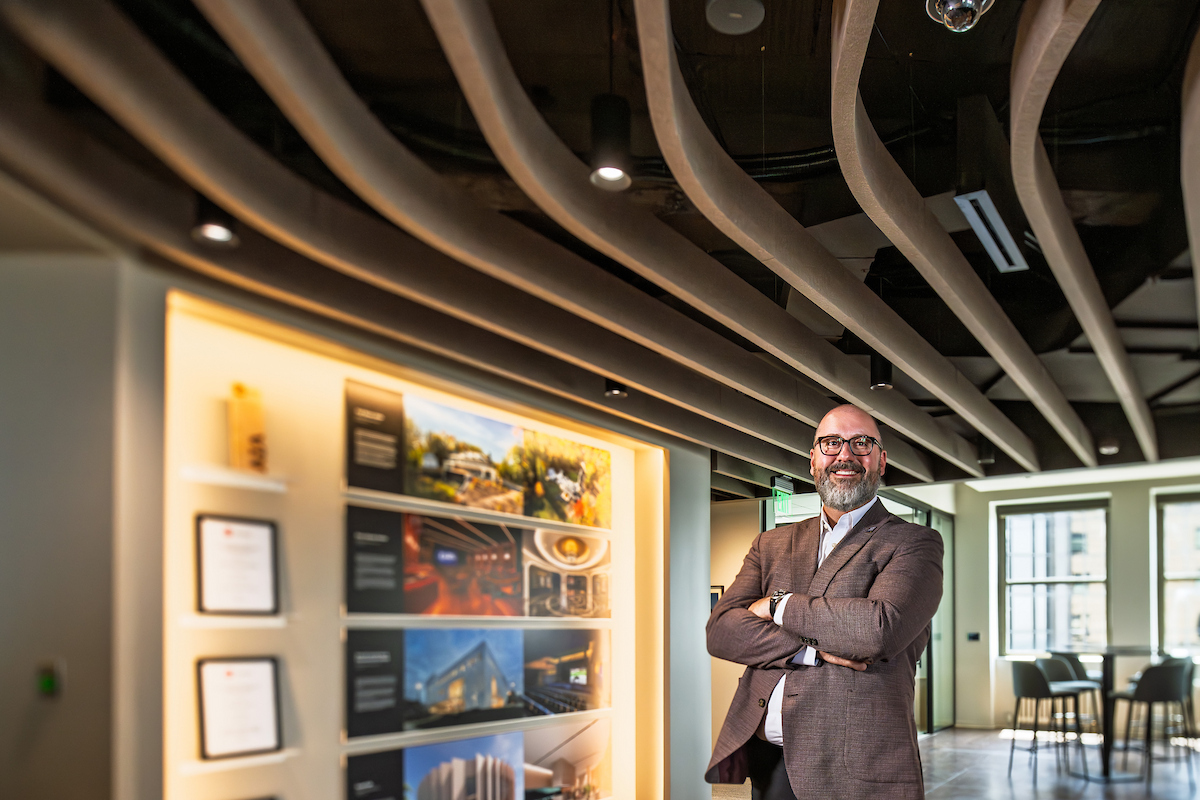
“I would encourage students to explore and better understand how impactful this profession can be,” Haney said. “It’s become so much more for me than I even thought it would be, and I am truly grateful for my time at Kent State, for my degree and for all of the opportunities it’s afforded me. Design is so much more than the thing you draw or model. It’s the thing that gets built and put into the world and how it influences and impacts the people that will experience it.”