Kent State University Wind Ensemble
January 30, 2026, at 5 p.m.
A210-215, Greater Columbus Convention Center
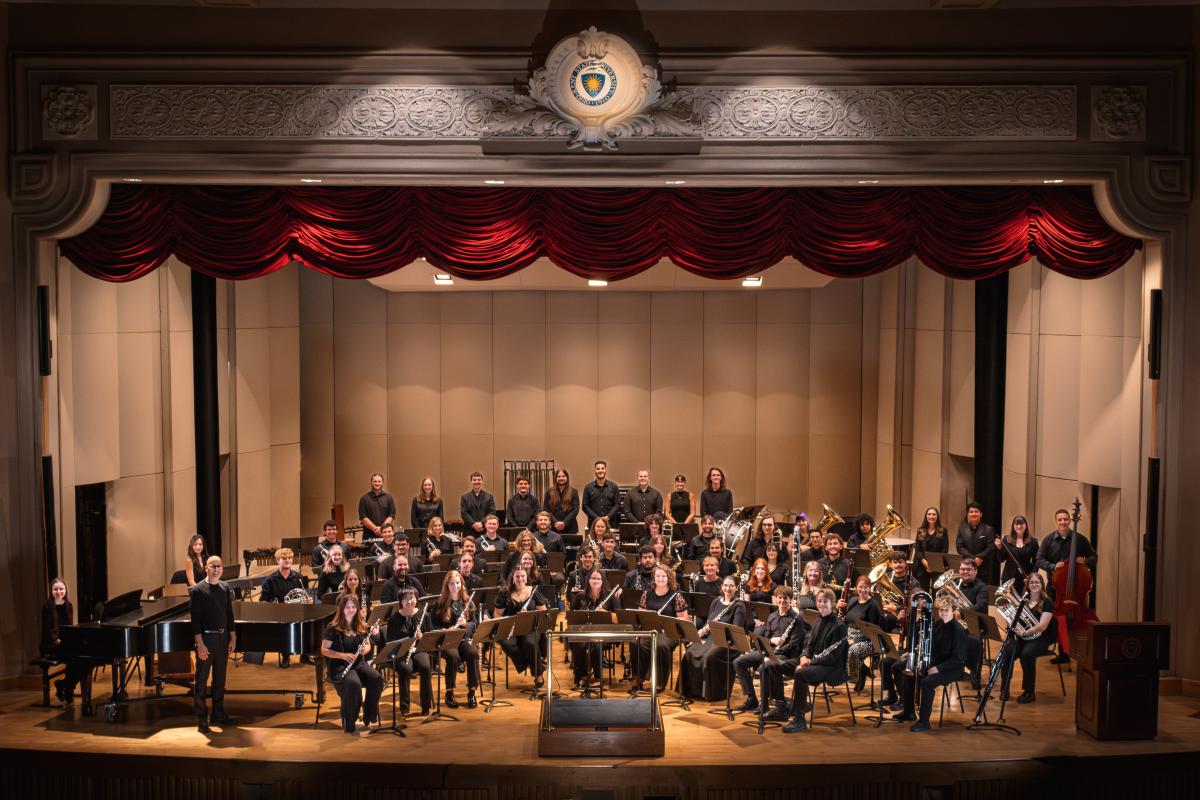
The Kent State University Bands are one of the university’s longest-standing programs, bringing together students, faculty, and community members through music.
Founded in 1919, the program has grown from 20 musicians to more than 400, supported by two faculty directors. The Kent State Athletic Bands, consisting of the Marching Golden Flashes (MGF) and Flasher Brass Pep Band, serve as the university’s most visible musical ambassadors. These ensembles are an integral part of the Kent State experience, bringing spirit and energy to athletic events, campus gatherings and beyond. With nearly 300 participants representing majors across the university, the ensembles blend tradition and innovation to deliver engaging performances that inspire audiences.
The band program also offers four school year-long concert ensembles: the Wind Ensemble, Symphony Band, University Band and Youth Winds. The Wind Ensemble has appeared at major state, regional and national conventions, including the Ohio Music Education Association (1991, 1995, 1998, 2000, 2003, 2017, 2026), the College Band Directors National Association (2018) and the Music Educators National Conference (1978, now NAfME). The ensemble has also performed in distinguished venues such as the Kennedy Center for the Arts (2008) and Severance Hall (2021, 2022). Its recordings highlight works by composers such as Floyd Werle and Ron Nelson. The Kent State Youth Winds, founded in 2021, features 70 talented high school musicians representing 25 schools throughout Northeast Ohio. Students in the program benefit from collaborations with leading conductors, composers and guest artists, including Steven Bryant, Nicole Piunno, Michael Markowski, Dennis Llinas, members of the Cleveland Orchestra and Kent State University faculty. Graduates of the band go on to serve as educators at the elementary, secondary and collegiate levels, while others perform in professional orchestras nationwide and in premier military ensembles of the United States Armed Forces. Many enjoy successful careers outside of music, reflective of the program's mission to foster a life-long appreciation for making music.
-
Conductor's Note
The music we create reflects the people, experiences, and communities that shape who we are. Conferences like this are a chance to celebrate that, honoring those who have guided us along the way and continue to shape the future of music.
We begin our program with Luminescence, a re-imagining of "Break Forth, O Beauteous Heavenly Light." Its familiar chorale melody is filtered through David Biedenbender’s unique voice. Like great teaching, the piece honors the past while inspiring us to imagine what’s ahead. It invites us to hear tradition in a new way and reminds us of our role as educators in bridging the past and the future.
"Run to the Light" tells a story many of us know well, a student discovers music, finds purpose through a mentor, and begins to chase a dream. For composer Ivan Trevino, that journey was made possible by a teacher’s belief, a family’s sacrifice, and the support of a whole community. His story, both deeply personal and widely relatable, mirrors the experiences of countless students across our state, and perhaps even some of your own.
The music of Latin America holds a special place in my heart. "Fantasía Sobre Motivos Colombianos" celebrates the beauty and richness of Colombian music and its strong band tradition. Rooted in Colombian folk melodies and shaped by classical forms, the piece creates a lively and engaging musical conversation. It also reflects the cultural vibrancy of the Glauser School of Music and the many different voices of our students.
"With Love and Grace" is a reflective gesture of reverence and respect. Nicole gave the piece this title because it captures the sense of meaning and respect that often surrounds special performances like this one. When first introducing it to an ensemble preparing for the Midwest Clinic, she described it as a kind of musical sendoff, a closing salutation that acknowledges the significance of the moment. These experiences don’t last forever, and this piece is a reminder to approach them with such perspective.
We close with "The Adventures of Jesse Owens," a portrait of one of Ohio’s most remarkable figures. Owens’ victories at the 1936 Olympics pushed back against the weight of racism and global tension, making him a symbol of courage, resilience and excellence. Raised in Cleveland, and trained just miles from here at The Ohio State University, his story serves as an enduring inspiration for generations, demonstrating the triumph of the human spirit over adversity.
To Ohio’s music educators, Kent State alumni and the mentors who made it possible for us to be here, thank you. This concert is for you.
-
Program
Wind Ensemble
Benjamin Lorenzo, Conductor
Ermuntre dich, mein schwacher Geist (1641)
Johann Schop arr. Bach/BiedenbenderLuminescence (2009)
David Biedenbender (Murphy Music Press)
Performed without breakRun to the Light (2022)
Ivan Trevino (Murphy Music Press)Matthew Holm, Percussion
Kieran Gresko, Percussion
Darin Olson, guest conductorFantasía Sobre Motivos Colombianos (1924)
Pedro Morales Pino
trans. González (Biblioteca Nacional de Colombia)With Love and Grace (2024)
Nicole Piunno (Metaphor Music Works)
Sarah Labovitz, guest conductorThe Adventures of Jesse Owens (2023)
Michael Daugherty (Michael Daugherty Music)I. Cotton
II. Berlin (1936 Olympics)
III. Gold -
Performers
Flute
*Madison Jones, bass
*Paige Rossi, piccolo
Hailey Pollock
Theresa Bremenour
Saoirse Edelen, piccolo
Emma Troyer, altoOboe
*^ Charlie Davis
Sarah Write, English Horn
Owen BurgessBassoon
*Julia Fedor, contrabassoon
Rey Lifford, contrabassoon
Madeline WaggonerClarinet
*^ Anthony Kalanick, E-flat
Aron Kooijman
Grace Burdorff, bass
Lyssi Slaughter
May McPherson
Brittany Brackett, contrabass
^ David Mehlhope
Anna Hurst
Jasper Faught, bassSaxophone
*James Allio, soprano
Hayden Storey, alto
Usayd Ally, alto
Alivia Shablesky, tenor
Jacob Roman-Willey, baritoneHorn
*Tayvis Mayfield
NJ Joshi
Julia Ribo
Sarah Basler
Orion LewisTrumpet
*^ Nora Moen
Nolan Miller
Daniel Keller
Sarah Kolesar
Chad Wagner
Jack MillerTrombone
*Joey Bugos
Mathew Raymond
Alison Joyce
Matthew Shrivastav
Carson Throckmorton, bassEuphonium
*Dylan Eshbaugh
Jacob Hart
Kristin MickovicTuba
*Draven Grimm
Andrew Rothhaar
Grace BatesString Bass
John Alexander
Emma ThompsonPiano
#Sarah Mellinger
Double Bass
Emma Thompson
John AlexanderPercussion
*^Kieran Gresko
Rj Maroz
Darren Moskowitz
Allison Perry
Daniel Holm
Mackenzie Brown
Derek Mickelson
Carter Anderson*principal
^graduate student
#alumnus -
Conductors
Benjamin Lorenzo
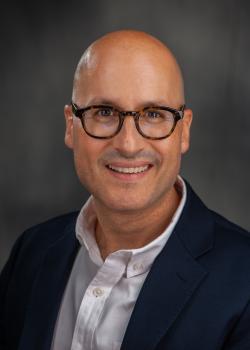
Benjamin Lorenzo is Associate Professor of Music and Director of Bands at Kent State University's Glauser School of Music. In this role, he conducts the Wind Ensemble, teaches conducting, and provides leadership for the university's band program. Prior to Kent State, he served as Associate Director of Bands and Director of Athletic Bands at the University of Arkansas, where he led the Razorback Marching Band and Wind Symphony. He has also held faculty positions at Oklahoma State and Texas Tech University, and began his teaching career in high schools across Florida and Texas.
An advocate for wind bands in Latin America, Dr. Lorenzo has worked with musicians in Mexico, Panama, Peru, Colombia, and the Dominican Republic. His international experience includes conducting in Kuala Lumpur and serving as a clinician for the Malaysian Band Directors Association Conducting Workshop. He was also a guest conductor for the World Youth Wind Orchestra Project (WYWOP) in Schladming, Austria. In the U.S., he remains active as a conductor, clinician, and adjudicator, and has led professional ensembles such as the West Point Academy Band and the W.D Packard Concert Band.
As an orchestrator, Lorenzo’s transcription of John Corigliano’s The Red Violin Chaconne—published by Boosey & Hawkes—received high praise from the composer and has been performed widely by university and professional ensembles. He has also arranged works for marching bands, wind ensembles, and the Dallas Winds. His writings appear in the Journal of Band Research, the WASBE Journal, and multiple volumes of Teaching Music through Performance in Band. He has presented at major national and regional conferences, including the Midwest Clinic, the Texas Bandmasters Association, CBDNA, and various state music education conventions.
Dr. Lorenzo holds Doctor of Musical Arts and Master of Music degrees in Wind Conducting from The University of Texas at Austin, where he studied with Jerry Junkin. He earned a Bachelor of Music in Trombone Performance from Florida International University under Mark Hetzler. A native of Havana, Cuba, he is a proud alumnus of Miami-Dade County Public Schools, where his teaching journey began.
Dr. Darin Olson
Dr. Darin Olson is the director of athletic bands at Kent State University. A native of South Dakota, he received a Bachelor of Music Education from South Dakota State University, a Master of Music from the University of Missouri, and a Doctor of Musical Arts degree from Ohio State University.
From 2013-2020, Olson served as assistant director of bands at the University of Wisconsin-Madison (UW). In this role, he designed drill and wrote musical arrangements for the UW Marching Band, directed athletic bands at events for basketball, hockey, and volleyball, conducted a concert band, and taught courses on conducting and marching band techniques within the Mead Witter School of Music. Prior to his appointment at UW, he served as assistant director of bands at Rider High School in Wichita Falls, Texas, which was highlighted by an appearance in the New Year’s Day Parade in London, England.
Olson is active as a conductor, clinician, and adjudicator in both the marching and concert mediums. He is an active member of the College Band Directors National Association (CBDNA) and the National Association for Music Education (NAfME). His achievements in academic settings have been recognized by induction into both the Phi Kappa Phi and Pi Kappa Lambda Honor Societies.
Sarah Labovitz
Sarah Labovitz is currently serving as the Assistant Director of the Hugh A. Glauser School of Music at Kent State University. Previously, Dr. Labovitz was the Chairman, Associate Director of Bands, and Coordinator of Music Education at Arkansas State University. She directed the Symphonic Winds, taught undergraduate and graduate music education and conducting, and supervised student interns. Prior to her appointment at A-State, Dr. Labovitz served as the Assistant Director of Bands/Director of Athletic Bands at Washburn University. She earned a BME from Bowling Green State University, an MME from Indiana University, and a DMA in Wind Conducting from the University of Kansas where she studied with Dr. Paul Popiel.
Dr. Labovitz is an active guest conductor having had the pleasure of working with numerous ensembles throughout the United States and abroad. While in Arkansas in addition to her work with the A-State Symphonic Winds, guest conducting the A-State Wind Ensemble, and visiting band rooms across the Mid-South, she served as the music director for the Diamond Brass Band. In addition to guest conducting, Dr. Labovitz is a sought-after clinician who has given multiple presentations at the National Association for Music Education’s National In-Service Conference, the College Band Director National Association’s (CBDNA) National and Regional Conferences, and numerous state music educator conventions. She has had the honor of presenting at the Midwest Clinic International Band and Orchestra Conference three times since 2013.
Building bridges between instrumental music education at the collegiate and secondary level is a lifelong pursuit of Dr. Labovitz. She was a contributing author to the Teaching Music Through Performance in Band series and has served as a Music Education Consultant for the NAMM sponsored Music Achievement Council and a member of the National Band Association’s Merrill Jones Memorial Young Band Composition Contest Committee. Past service to the profession includes time as an Arkansas Bandmasters Association Board Member, the Collegiate Chair for the Arkansas Music Educators Association, and President of the Arkansas Chapter of CBDNA. She was recognized for her service to the profession, community, and her university as the 2021 recipient of A-State’s Faculty Achievement Professional Service Award and is currently the chair of the CBDNA Music Education Committee.
Her public-school experience includes serving as Director of Bands at Athens High School in Athens, OH and Director of Instrumental Music at Admiral King High School in Lorain, OH. Having grown up in Akron, she is excited to be back home in Northeast Ohio with her husband Dr. Charles Page, who currently serves as the High School Band Director for Alliance City School District, and her two rescue pups, Rosie and Koko.
-
Soloists
Dr. Matthew Holm
Dr. Matthew Holm is Director of Percussion Studies at Kent State University, where he has revitalized the percussion program in all facets since 2017. Described as “…performing with unerring security” (Cleveland Classical), and “…an outstanding musician” (Percussive Notes), Holm is equally in demand as a chamber player and orchestral musician.
Dr. Holm has performed with the Columbus Symphony, West Virginia Symphony, Baton Rouge Symphony, Phoenix Symphony and Youngstown Symphony Orchestras. Matthew also frequently collaborates with the Cleveland Composers Guild and the Cleveland Chamber Choir.
Holm’s 2022 album "Auditory Illusions for Electronic Percussion" was featured on WCLV Cleveland Classical in June 2023. Percussive Notes described the project as a “high-quality set of recordings that could not come at a better time” as well as “powerful…and serving the percussion community well.” Matthew also released an album of all original compositions, entitled Ambient Scenes, in 2023. Both projects can be found on all streaming platforms, including Apple Music and Spotify.
Under Holm’s direction, the KSU Percussion Ensemble has been selected to perform at OMEA in 2020, 2022, 2023 and 2025 and has performed at the Percussive Arts Society International Conventions in 2017, 2019 and 2023. The ensemble also collaborated with the Heartland Marimba Quartet, performing for the opening concert for the Center for Mallet Percussion Research in Kutztown, PA.
Active within the Percussive Arts Society (PAS), Matthew was elected to serve on the University Pedagogy Committee (2017-2021) and served as President of the Arizona Chapter of the Percussive Arts Society. A former marching member of the Cavaliers Drum and Bugle Corps (world champions 2000, 2001, 2002), Holm was the percussion coordinator for the 2023, 2024 and 2025 SoundSport Champion Rhythm IN Blue (Bluecoats organization) and director/arranger for the PASIC champion Lamar University Drumline. Holm is a Marimba One artist, Innovative Percussion artist and Black Swamp education team member.
Kieran Gresko
Hailing from Pennsylvania, Kieran Gresko earned his Bachelor's Degree in Music Education from The Pennsylvania State University, where he studied with Dr. Lee Hinkle for four years. He is currently studying at Kent State University, pursuing a Master’s Degree in Music Performance. Kieran is also working as the Graduate Assistant for the Percussion Studio as well as the Drumline Teaching Assistant for the Marching Golden Flashes.
Professionally, Kieran has performed with the Williamsport Symphony Orchestra and has received several notable honors. Most prominent honors include the “Marjorie Jane Brewster Memorial Scholarship,” which supports one year of graduate study at a university of the student’s choice. Another honor was the privilege to be part of the collegiate premiere of Missy Mazzoli’s “Millennium Canticles,” as part of the concert series “American Mavericks, Malcontents, and Mischief-Makers” at The Pennsylvania State University School of Music.
-
Program Notes
David Biedenbender’s "Luminescence" is based on fragments of “Break Forth, O Beauteous Heavenly Light,” and opens with an intense rhythmic gesture from the timpani before launching into shimmering harmonies and textures in the woodwinds and metallic percussion. The first fragment of the original tune is a declamatory statement of the consequent phrase in the horns, followed shortly thereafter by the antecedent phrase in the trumpets and a brief response by the upper woodwinds.
An abruptly stark clarinet solo begins a moment of respite, with principal players across several sections playing fragments of the source material in serene and varied orchestrations. Building in intensity, the timpani restart the motor of the piece and pass off to a rhythmic motif in the saxophones and mallet percussion. Extended and harmonically undulating material is passed throughout the ensemble. As motifs and gestures from the A section of the piece layer in, a recapitulation is imminent.
Eventually, the vibrant woodwind melody from the opening bars of the work breaks through, and the antecedent phrase of “Break Forth, O Beauteous Heavenly Light” is presented in augmentation by the trumpets. The final moments of the piece highlight Biedenbender’s signature compositional techniques, with whirling woodwinds, a triumphant statement of the primary theme, and expansive harmonies. The work culminates with three scintillating tone clusters, each dovetailed by glistening percussion.
"Run to the Light" was written for Eastman School of Music’s centennial celebration. It was premiered by Eastman Wind Ensemble on Oct. 19, 2022. The piece is dedicated to a thousand or so very special people in Victoria, Texas.
A newly hired band director at my high school had a diploma hanging up in his office. “What’s that?” I asked. “It’s from Eastman,” he said. “What’s Eastman?” I asked again. “It’s a music conservatory,” he said. I left his office thinking to myself, “What’s a music conservatory?”
That was my junior year of high school, and that’s how foreign this whole classical music thing was to me. Fast forward one year later. I auditioned at Eastman and got in. This was due in large part to this teacher, his guidance, and my own luck that he took a job teaching music in small town Victoria, Texas, where I lived. Thank you again, Mr. Mikula.
When I told my mom I got accepted, she didn’t congratulate me. Well, of course she did, but not right away. The first thing she said was “how are we going to pay for it?” My parents didn’t go to college, but are hard-working, smart people who still make their living cutting hair. They did everything they could to make music part of my life. Paying for college though, especially at a school like Eastman, was far beyond anything they had saved or planned for. My parents put together whatever funds they could and did what everyone does in Texas during a time of need: they organized a bar-b-cue benefit. It’s a go-fund me of sorts, but an in-person one with BBQ, beans, rice and all the fixings. One of my dad’s regulars was a writer for the local paper and wrote a charming story about my parents, my opportunity to attend Eastman, and about the upcoming BBQ benefit. Local restaurants donated food, and my parents and an assembly line of volunteers served plates to friends, family and members of our community who showed up to give their support and enjoy a hot meal. There was even an auction with one of those fast-talking auctioneers helping the crowd bid on donated items. My parents hosted this benefit for four summers, and each time, they raised $10,000 for my college tuition, with over 1,000 people attending each year. This is still incomprehensible to me. Meanwhile, Eastman provided me with a generous yearly scholarship to ease the cost of tuition, which helped greatly. My journey to Eastman was looking more and more possible, thanks in part to this scholarship, and of all things, BBQ. But we still weren’t quite there.
One day, Mary Lou Urban, an unassuming family friend of ours, walked into the barber shop to see my mom for her regularly scheduled perm. This time, Mrs. Urban came in holding a small envelope with my mom’s name on it. Inside was a gift: a personal check for $10,000. My mom cried, Mrs. Urban cried. But that’s not all. Each summer for four years, she gave my mom a check for this same amount. Mrs. Urban is no longer with us, but what she did for me and my family is unforgettable. My mom refers to her as my angel. I do too. Between the community’s support, Eastman’s scholarship, Mrs. Urban’s gifts, and my parent’s own hard work and sacrifice, I got to Eastman.
20 years later, I find myself at Eastman again, this time as a visiting teacher to step in for the one and only, Michael Burritt, my former Eastman professor who is on a sabbatical leave. What an honor. I return with my beautiful wife, Amanda, who I met on Gibbs St. when we were both students. This music is dedicated to all of the supporters in my hometown community, Mr. Mikula, Mrs. Urban, my parents, and all of the people who helped me run to my light. I carry them with me, in my teaching, composing and performing, and I hope this spirit of joy and gratitude shines through in this music.
– Ivan Trevino
"With Love and Grace" is a musical representation of a closing salutation. It can be a way of saying thank you or expressing honor for a special occasion. It can be a way of expressing forgiveness or saying goodbye. It can also signify the closing of a chapter in life. The music captures the complex emotions that often accompany these significant life changes or important moments.
Commissioned by Lake Travis High School. Premiered at the 2024 Midwest Clinic.
– Program note from score
Morales Pino was an influential Latin American composer who drew inspiration from Colombian folklore to create his music. He was instrumental in popularizing Colombian musical genres such as bambuco, corridors, and dance, and incorporated European music into his typical ensembles. One of his most famous works is the "Fantasía sobre motivos Colombianos," which is structured in an ABAB form around two Colombian melodies. The piece begins with a melancholy and dirge-like introduction, gradually revealing the first theme in tandem with the descending harmonic progression. The mood then shifts to a cheerful and dance-like style, introducing the bambuco. The first theme then reappears in a faster tempo, transforming its original melancholy into something more spirited but still in a minor key, paving the way for the second theme's lighthearted introduction.
Originally composed for symphony orchestra, the work and has been transcribed for many different ensembles and securing a place in the traditional repertoire of the Colombian wind band. This transcription was made by Dionisio González as part of a dissertation or thesis in Colombia in 2008.
– Program note by Benjamin Lorenzo
"The Adventures of Jesse Owens" for Symphonic Band was commissioned by Kappa Kappa Psi, National Band Fraternity, and Tau Beta Sigma, National Band Sorority for the National Intercollegiate Band. The world premiere was given by the National Intercollegiate Band, conducted by Rodney Dorsey, in Orlando, Florida, on July 11, 2023.
1. Cotton. Jesse Owens (1913-1980) was the youngest of ten children, the son of a sharecropper, and the grandson of enslaved people. The family lived in a small shack in rural Oakville, Alabama ,and everyone picked cotton for a living, including Jesse beginning at age seven. The first movement is a “work song” composed of pulsating, multi-layered ostinatos accompanied by a rhythmically relentless anvil.
2. Berlin (1936 Olympics). As a student athlete on the track and field team at Ohio State University, Jesse Owens set five world records in 1935. He was subsequently invited to join the United States Olympic team for the 1936 Olympic Games in Berlin, Germany. The German Nazi Party hoped that hosting the 1936 Olympic Games in Berlin would provide an international showcase for the Third Reich and give legitimacy to its racist policies of Aryan supremacy. The participation of American Jewish and Black athletes subsequently caused great controversy. In the second movement, I allude to three different musical works associated with the opening ceremonies of the 1936 Berlin Olympics: Richard Strauss: Olympische Hymne (1936); My Country, 'Tis of Thee (also known as America, 1831); Deutschlandlied (German National Anthem, 1922). As these melodies are interrupted by rolling drums, the ominous mood of the music anticipates World War II, started by Germany in 1939.
3. Gold. By winning four gold medals and setting world records in the 100 meter, 200 meter, 400 meter relay and long jump, Jesse Owens became the most successful athlete of the 1936 Berlin Olympic Games. His victories made international headlines as “the fastest man in the world,” challenging the German Nazi doctrine of Aryan supremacy. Inspired by the superhuman feats of Jesse Owens at the Olympics, the brightly orchestrated final movement, marked “Presto”, moves at breakneck speed to a triumphant finish line.
– Program note by composer
-
School Of Music Faculty
Brass
Amanda Bekeny, trumpet
Ken Heinlein, tuba
Benjamin Hottensmith, horn
David Mitchell, trombone, euphoniumPercussion
Matthew Holm
Matthew Larson
Nicholas PetrellaPiano
Donna Lee
Anna GrudskayaStrings
Amy Glick, violin
Hannah Moses, cello
James Rhodes, viola
Bryan Thomas, double bassVoice
Marla Berg
Tim Culver
Hannah Jencius
Sandra Ross
Lara Troyer
Jay White
Thanks and Acknowledgments
Kent State University, College of The Arts
President Todd Diacon
Emma Thompson, Photography
Olivia Tharp, Photography
Sarah Kolesar, Program Design