
Department of Biological Sciences

Quality of Life: Researchers Exploring Treatments for Spinal Cord Injured Patients
A research group in the College of Arts and Sciences at Kent State University is searching for potential treatments for men who have suffered spinal cord injuries and hope to regain bladder control and sexual functions.

Researchers Take a Closer Look at Nitrogen in the Chihuahuan Desert, New Mexico
Researchers from Kent State University and the University of New Mexico determined how nitrogen-fixing plants and soil microbes contribute to the overall nitrogen availability in the Chihuahuan desert in New Mexico.

Patterns, Populations And Podcasts: Computational Ecologist Receives Prestigious Early-Career Award from NSF
Recent funding from the National Science Foundation (NSF) has given interdisciplinary researchers the opportunity to help drive our understanding of patterns in nature when bringing together big data sources collected in different ways. The NSF awarded Christie Bahlai, Ph.D., assistant professor in…
Honors College Student Studies Abandoned Mines in Cuyahoga Valley
Michael Back is a graduating senior Honors College student, majoring in biology with a concentration in organismal biology and a minor in Spanish. Originally from Sharon Center, Ohio, Michael has been interested in ecological restoration since he was in high school. Now in the final semester of his Senior Honors Thesis, Michael used his thesis to delve deeper into his ecological interests. His thesis analyzes a new restoration technique for abandoned surface mines in Cuyahoga Valley, examining “soil bulk density and soil chemistry.”
Honors Thesis Student Explores Climate Change’s Effect on Bird Migration
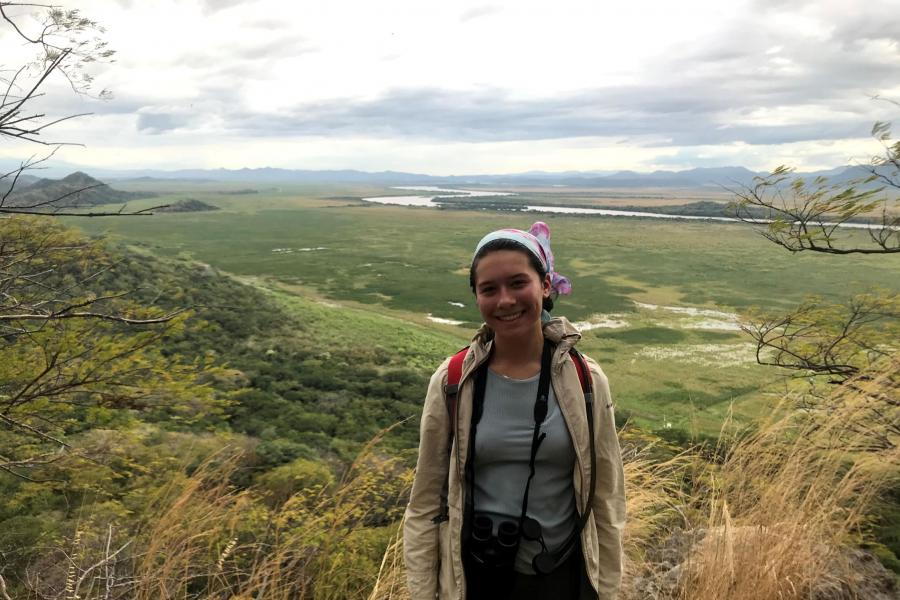
Nora Honkomp is a senior Honors College student from Cincinnati, Ohio, majoring in zoology. She says, “Birds have always been my thing,” and her love of birds drove Nora not only to attend Kent State for its zoology program, but it also led her to complete a Senior Honors Thesis. Nora hopes to atten…
Honors Thesis Student Explores Ethics in Organ Procurement Programs
Sarag Gogineni is a junior Honors College student from Roseville, California, majoring in biology pre-med and minoring in healthcare ethics. Sarag discovered his passion for ethics during his time at Kent State and has decided to complete a Senior Honors Thesis as a way to combine his interest in et…
Zoology Student Works on Honors Thesis About Scent and Predation
Alexandra Euwema is a third-year honors student from Springfield, Virginia, majoring in zoology. From early in her college career, Alexandra has wanted to earn a master’s degree in wildlife conservation, and this goal was a major inspiration for her Senior Honors Thesis topic. Alexandra is in her fi…
Kent State Researchers Challenge the Growing Antibiotic-Resistant Bacteria Problem With New Compound
“The pessimistic estimate is that by 2050, antibiotics could be obsolete,'' said Songping Huang, Ph.D., professor in the Department of Chemistry and Biochemistry in the College of Arts and Sciences. Huang and his Kent State team, including Min-Ho Kim, Ph.D., associate professor in the Department of Biological Sciences, are working on closing that chasm with the development of new antimicrobials.
Undergraduates look online to advance their environmental research
What was even more of a departure than taking classes remotely? Many summer research experiences were moved online this year as well. Fortunately, with creativity and an open mind, there are lots of opportunities to do important scientific research using online tools and data.